
Last updated November 21, 2026
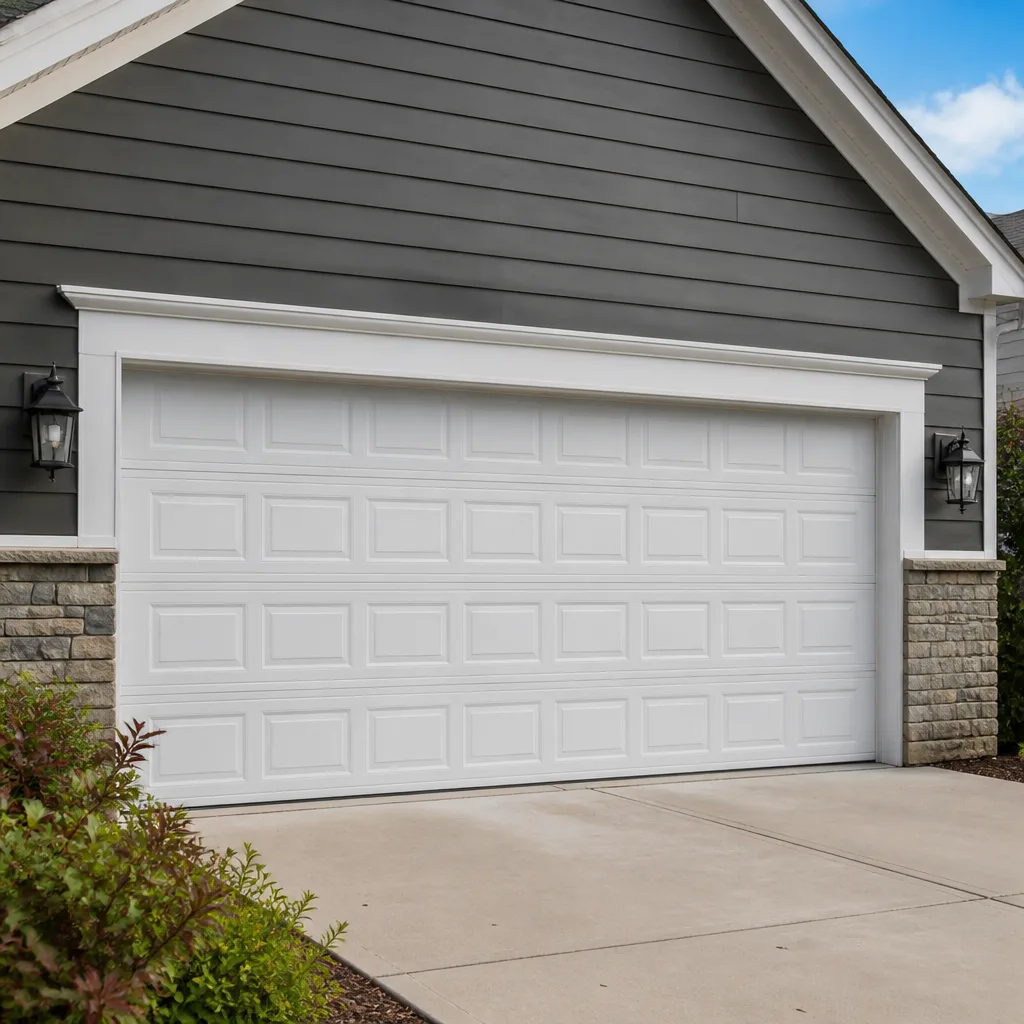 Raised-panel steel
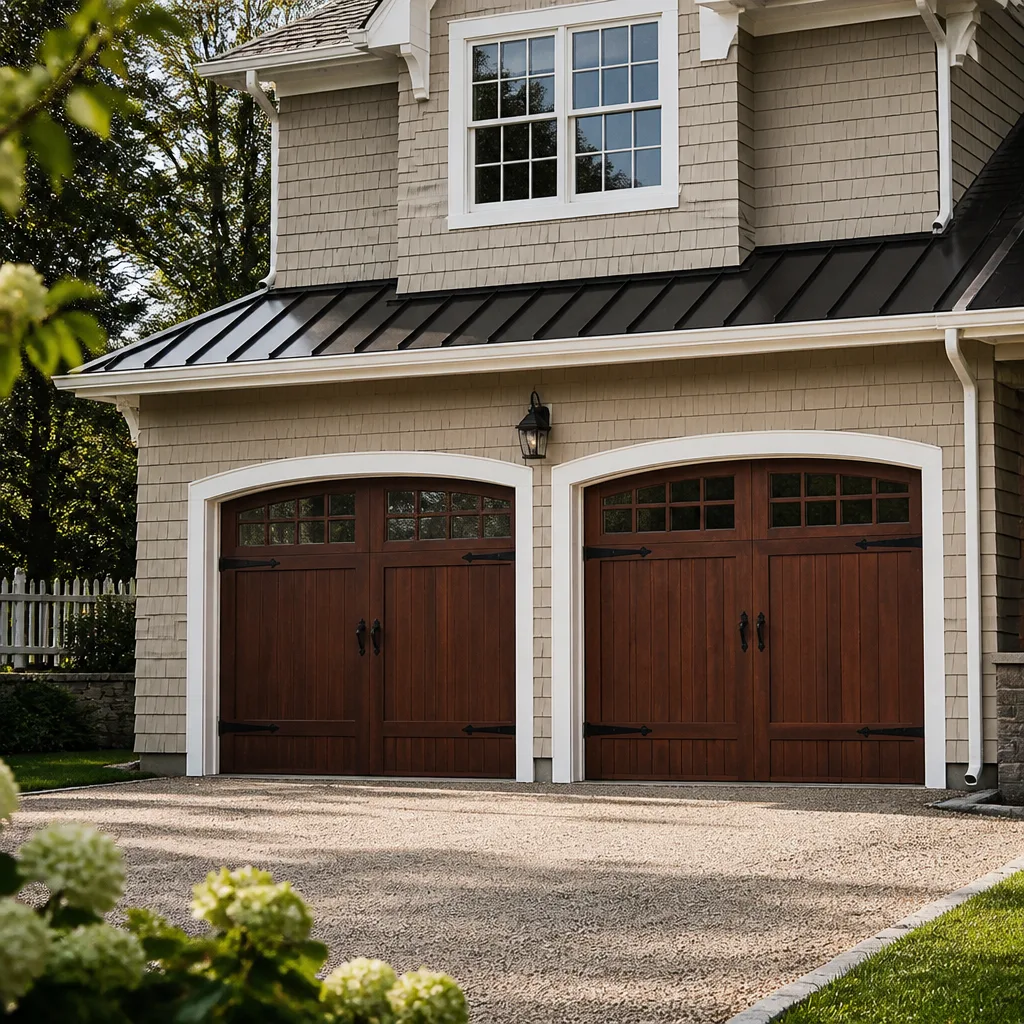 Carriage house
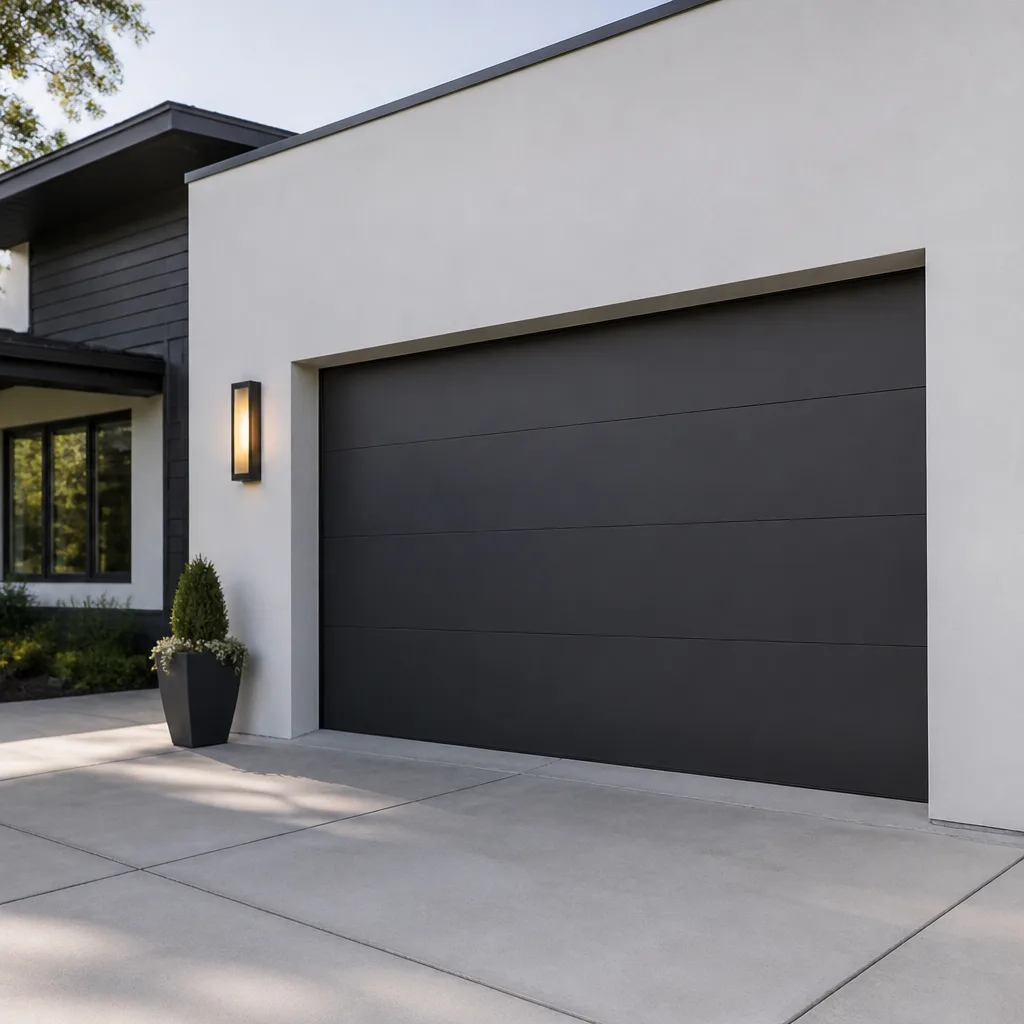 Modern flush
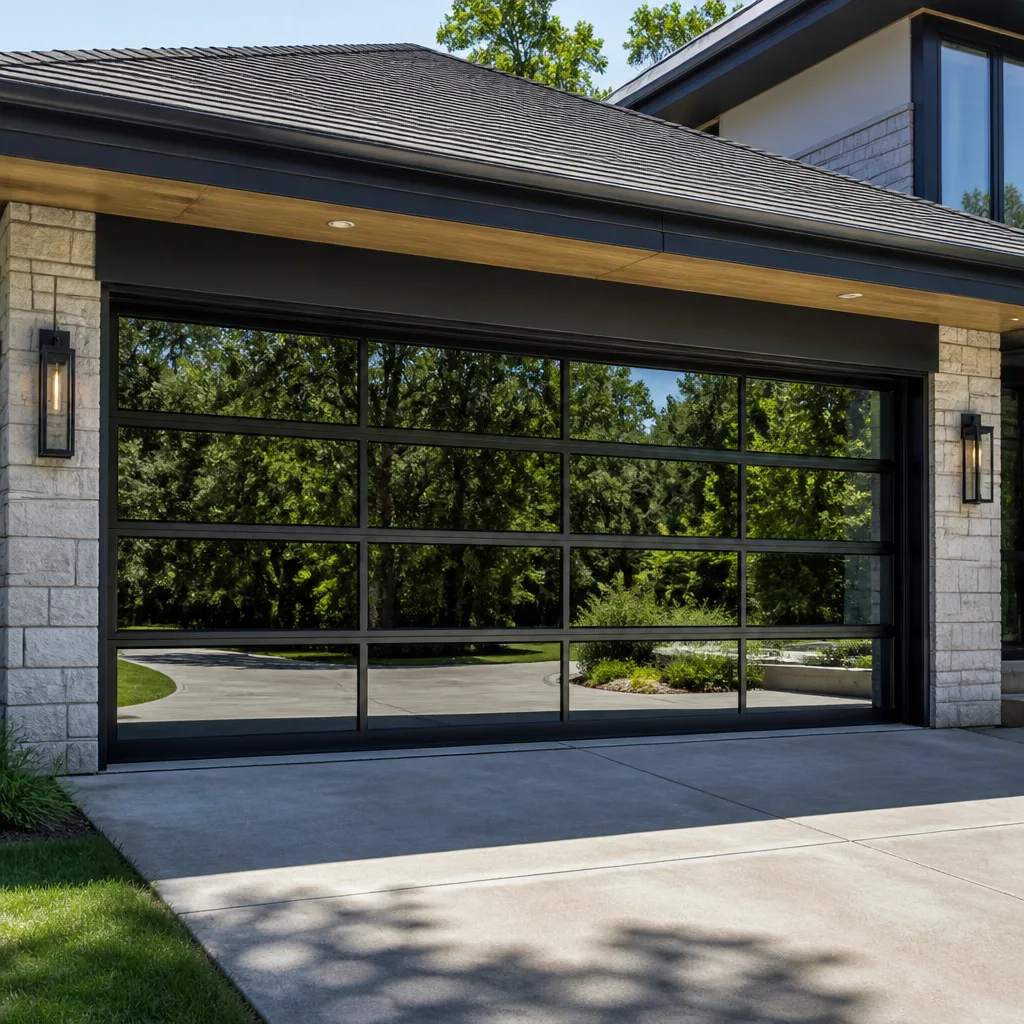 Full-view glass
 LiftMaster openers
 Chamberlain openers
Full 25-point door and opener safety check with every visit - springs, cables, rollers, tracks, and your LiftMaster or Chamberlain opener included
You get a price before we start. It does not change when the pro arrives.
Get your free estimateGarage Door Permits, Codes & Inspections in Greenwood, IN: What You Need to Know
A garage door replacement looks like a simple swap, so most homeowners never think to ask about permits. And here’s the counterintuitive part: for most of the work done on Greenwood garage doors, you don’t need one. A broken spring, a failing opener, a dented panel – those are repairs, and repairs generally don’t trigger a permit. What does trigger one is anything that changes the structure or the opening itself: a new door on a modified rough opening, an altered header, a new opener circuit added to the panel. Those rules are specific to Greenwood and Johnson County, and they surface years later at home inspection or insurance claim time. This guide walks through which projects need a permit, how local inspections work, what inspectors check, and who carries the liability when a permit gets skipped.
Quick Answer
In Greenwood, simple garage door repairs – replacing a spring, opener, cable, roller or panel in kind – typically don’t require a building permit. New garage door installations and any project that modifies the rough opening, header, or electrical circuit generally do require a permit from the City of Greenwood’s building department, and the work needs to pass inspection before it’s signed off. Always confirm the current rule with the building department before work starts, because local requirements can shift.
Styles & brands we work with
- Raised-panel steel
- Carriage house
- Modern flush
- Full-view glass
- LiftMaster openers
- Chamberlain openers
Table of Contents
- Which Garage Door Projects Need a Permit in Greenwood?
- What’s Typically Exempt From Permitting
- How Greenwood’s Building Department Handles Residential Garage Door Inspections
- What Inspectors Actually Look For
- Wind Load and Energy Code Considerations for New Doors
- What Unpermitted Work Shows Up As During a Home Inspection
- Contractor vs. Homeowner: Who’s Responsible for the Permit?
- The Step-by-Step Permit and Inspection Process
Which Garage Door Projects Need a Permit in Greenwood?
The line is drawn around structural and electrical change, not around the door as an object. Replacing a garage door with a like-sized door of the same type is usually treated as a repair or replacement and doesn’t need a permit. Modifying the opening or the structure around it is a different story – that’s construction, and construction needs a permit. In practice, the projects that most often cross the line in Greenwood look like this:
- Enlarging or changing the rough opening – going from a single door to a double, or changing the width or height, is a structural change and needs a permit.
- Altering or replacing a header – the header carries load above the garage opening. Any change to it needs an engineer’s detail or a plan review and a permit.
- Adding an opener circuit – if there’s no existing outlet where the opener needs power and a new circuit is run, that’s electrical work and generally requires a permit.
- Converting the garage – turning a garage into living space, or adding a door where there wasn’t one, is a structural and life-safety change that always needs a permit.
- New construction or an addition – a garage door on a new build or an addition is part of the permitted scope of the whole project.
What surprises homeowners is how often a “door replacement” quietly becomes a structural job. If the old door is a Wayne Dalton and the new one is an Amarr, and the rough opening needs trimming or the header needs reinforcing to fit the new door’s track and hardware, that’s no longer a simple swap. That’s when the permit question becomes real. We can’t give you a legal ruling on your specific opening – only the City of Greenwood’s building department can – but we can tell you which of these categories your project falls into, and that conversation happens before the work is scheduled, not after.
What’s Typically Exempt From Permitting
Repairs to an existing garage door generally don’t require a permit in Greenwood. That covers the vast majority of what we’re called out for. A garage door spring repair isn’t a structural change – it’s a mechanical repair on the existing assembly. Same goes for the opener, cables, rollers, hinges, and replacing a single damaged panel with a matching one. None of that alters the structure or the opening.
Here’s the practical list:
- Spring replacement – torsion or extension – exempt.
- Opener replacement, like-for-like, on an existing outlet – exempt.
- Cable, drum, roller and hinge replacement – exempt.
- Panel replacement with a same-model panel from Amarr, Clopay, Raynor or the original manufacturer – exempt.
- Weather seal, bottom rubber and trim replacement – exempt.
- Tune-ups, balancing and safety-reverse adjustments – exempt.
Two things to watch. First, “exempt” doesn’t mean “no code applies.” A garage door is still required to open and close safely, and the opener’s safety reverse is a life-safety function under Indiana’s adoption of the model residential code. Second, if a repair quietly becomes a modification – say, the new opener needs a new outlet, or the new panel requires a different track – that’s the moment to stop and check with the building department before continuing. It’s better to spend a phone call than to have a permit problem sitting in your file when you go to sell.
How Greenwood’s Building Department Handles Residential Garage Door Inspections
Greenwood’s building department handles residential garage door work under the same residential permit process it uses for any other structural or electrical change. That means a permit application, a plan review for anything structural, an inspection after rough-in (for framing and electrical), and a final inspection once the door is hung and adjusted. For a like-for-like door replacement where the opening isn’t touched, no inspection is typically involved. The trick is knowing which category your job is in before you apply.
In our experience working with Greenwood homeowners and the local contractor network, the process usually looks like this:
- Confirm the scope in writing. Before anyone pulls a permit, the project should be spelled out: is the opening changing? Is the header being altered? Is a new circuit being added? Ambiguous scopes cause permit disputes later.
- Apply with the city. The permit application goes to the City of Greenwood’s building department. A contractor who regularly works in the county will usually handle this, since they know the forms and the plan review turnaround.
- Plan review, if structural. A header change or an opening modification typically requires a plan review, and sometimes an engineer’s letter, before the permit is issued.
- Rough-in inspection. If the header was framed or the electrical was reworked, the inspector looks at that before the drywall or trim goes back up.
- Final inspection. Once the door is installed and balanced, the final inspection confirms the installation is complete and safe.
- Get the sign-off in your records. Keep the permit number, the inspection sign-off and the final invoice in the file you’d hand to a buyer. That record is worth more than you’d think.
One local wrinkle: Greenwood straddles Johnson County, and every municipality applies the code a little differently. A project that needs a permit inside Greenwood city limits may be treated differently in an unincorporated part of the county. That’s why the first call should be to the building department, not to a contractor’s guess. We’re happy to help you frame the question, but the answer comes from the city.
What Inspectors Actually Look For
When an inspector walks up to a newly installed garage door in Greenwood, they’re not judging appearance or brand preference. They’re checking a small, fixed set of things that determine whether the door is safe and installed to code.
- Attachment and anchorage. The track brackets and spring pad need to be properly fastened to the framing. An inspector can tug on a bracket and see whether it’s anchored into solid material or just drywall.
- Header and framing. If the header was modified, the inspector checks it against the plan and, where required, against an engineer’s detail.
- Opener safety reverse. The opener must reverse when something blocks the closing door. This is the single most-tested life-safety feature on a garage door, and it’s tested by hand.
- Photoelectric sensors. The sensors at the bottom of the track must be mounted, aligned and functional.
- Balance and travel. The door should lift and lower evenly and stop where it should. A door that binds or slams its limit is an inspection fail.
- Electrical. If a new opener circuit was added, the inspector checks it against the electrical code and confirms the outlet and wiring are correct.
Anything an inspector flags comes back to the installing contractor, not the city. That’s why a contractor’s relationship with the local code process matters as much as their door work: if the install was done right and the permit was pulled correctly, the inspection is a routine formality. If a structural change was made without a plan review, the final inspection won’t pass, and everything gets more expensive and slower from there.
Wind Load and Energy Code Considerations for New Doors
Indiana is an inland state, and Greenwood sits in a region where the design wind speed applied to residential structures is meaningful but not severe. What that means for a garage door is that the door and its hardware need to be selected and installed to meet the wind-load requirements in the code the city adopts – not just the wind speed at the moment it’s installed. A garage door is the largest single opening on most Greenwood homes, and it takes wind pressure across its whole surface, so the door, track, hinges and reinforcement all have to be rated together.
The practical side of this for homeowners:
- Door rating matters. Manufacturers like Amarr and Raynor publish wind-load ratings for their door models. The rating needs to match what the code requires for your location, not just what’s cheapest on the shelf.
- Reinforcement is part of the door. A rated door with a standard track is only rated if the reinforcement hardware that ships with it is installed. Skipping the struts and anchors undoes the rating.
- Insulated doors have energy benefits, not energy code triggers. Upgrading to an insulated door helps with temperature in an attached garage, but the energy code isn’t going to require R-value in a garage door in a residential application. Choose insulation for comfort and quieter operation, not because a permit hinges on it.
- Openers count too. A modern LiftMaster or Chamberlain opener with a battery backup, and the tension-monitoring safety features now common on new openers, is often a good time to upgrade alongside a new door, since the opener circuit and its mounting are part of the same installation.
None of this is a reason to avoid a new door. It’s a reason to buy the right one, from a contractor who understands which doors carry the ratings the Greenwood code asks for and installs the reinforcement the rating depends on.
What Unpermitted Work Shows Up As During a Home Inspection
Home inspectors see a lot of garage doors, and they notice things most homeowners never look at. Unpermitted work doesn’t leave a sign that says “unpermitted.” It leaves a pattern. A header that’s been notched for a taller door, a rough opening that’s wider than the original framing, a new outlet on a circuit with no label in the panel, or a door that’s clearly newer than the rest of the house with no corresponding inspection record – all of that raises a flag.
The bigger issue is what buyers’ agents do with it. When an inspector writes up “evidence of modification to garage door header, no permit documentation available,” the conversation moves quickly. Buyers ask for a credit, ask the seller to produce a permit, or walk. Agents who represent buyers tend to treat an unpermitted structural change as a known unknown, and they price it into the offer or use it as a bargaining point. The cost of the fix is often small compared to the reduction in the offer.
What unpermitted door work typically shows up as:
- An updated door with no paper trail. The inspector sees the door was changed but finds no permit record for the structural or electrical change that came with it.
- A framed opening that doesn’t match the original framing. New studs and a new header show up as inconsistent with the rest of the wall.
- Electrical that’s not documented. A new opener outlet wired off an existing circuit, with no permit and no inspection, reads as unpermitted electrical.
- Doors that won’t pass the safety test. A door that doesn’t reverse or lacks sensors is a life-safety defect in an inspection report, and it’s often the write-up that gets escalated.
- Manufacturer and model mismatch. A newer door that’s rated for a lower wind load than the code requires can come up, especially in an insurance claim after a storm.
None of this is a reason to panic. It’s a reason to keep the paper: the permit, the inspection sign-off, and the invoice with the model numbers on it. If a future buyer’s inspector finds that record in your file, the conversation ends there.
Contractor vs. Homeowner: Who’s Responsible for the Permit?
The short answer is that the person or company doing the work is responsible for pulling the permit, and the homeowner is responsible for confirming the permit was pulled. That split matters because a homeowner who assumes a contractor pulled a permit, and a contractor who assumes a small scope didn’t need one, are how unpermitted work happens.
Here’s a clear breakdown:
- Contractor’s responsibility: determine whether the scope requires a permit, pull it in their name if required, coordinate inspections, and correct anything the inspector flags.
- Homeowner’s responsibility: ask, in writing, whether the project requires a permit, and request the permit number and inspection sign-off when the work is done.
- Shared responsibility: confirm the scope in writing before work starts. A one-line description of the job (“replace door, no structural change”) is what protects both sides.
When a permitted job goes through the city, the contractor is on record as the responsible party. When a homeowner pulls a permit themselves, they take on the responsibility and any inspection failures. For anything structural, the cleanest path is a contractor who pulls the permit, coordinates the inspection and leaves the sign-off with the homeowner. If a contractor proposes to skip a permit for a structural change, that’s not a shortcut – it’s a problem waiting for a home inspection. We won’t do that, and we’ll tell you honestly when your project needs to go through the city.
The Step-by-Step Permit and Inspection Process
If your Greenwood project crosses the permit line, the process is more predictable than it sounds. Here’s the sequence, in the order it usually happens.
- Define the scope accurately. Write down exactly what’s changing: door size, opening size, header, electrical, and the new door’s model and wind-load rating. The scope is the foundation of the permit.
- Call the City of Greenwood building department. Confirm the permitting requirement, the plan review requirement, and the current fee. Fees are set by the city and change over time, so ask for the current number.
- Submit the permit application. Where structural work is involved, include a plan or engineer’s detail for the header change.
- Schedule the rough-in inspection. After framing and electrical are roughed in and before the door goes on, the inspector confirms the structure and wiring.
- Install the door and opener. Balanced, anchored, with safety reverse and sensors tested and documented.
- Schedule the final inspection. The inspector signs off on the completed install.
- File the paperwork. Keep the permit, the inspection sign-off, and the invoice, and hand a copy to the next owner of the house.
For repairs and replacements that don’t need a permit, there’s no city inspection – but the safety checks still happen. A garage door repair should always end with the door balanced and the opener tested. And a spring, cable or opener change is a job for a trained technician – a torsion spring under load can cause serious injury, which is why we treat spring replacement as a dedicated service rather than a general handyman job.
Common Mistakes to Avoid
- Assuming a new door never needs a permit. A like-for-like swap usually doesn’t. A rough opening change, a header change or a new opener circuit does. The assumption that “it’s just the door” is how a structural change slips through without a permit.
- Trusting a contractor who volunteers to skip the permit. If a project crosses the line and the contractor suggests skipping it to save time, that’s your signal to find a different contractor. The permit is there for a reason, and skipping it puts the problem on your house record.
- Not documenting the work. A permit number and an inspection sign-off are small pieces of paper. They’re also the difference between a clean home sale in Greenwood and a negotiation that costs more than the door did.
- Choosing a door that isn’t rated for the wind load. An unrated door or a rated door installed without its reinforcement hardware fails the code the city adopts. Ask for the wind-load rating in writing before the door is ordered.
- Treating electrical as part of the door job. A new opener outlet isn’t a garage door part – it’s electrical work that generally needs a permit and an inspection. Get it right up front.
- Ignoring the safety reverse on older openers. An older opener without working safety reverse passes no inspection and fails any home inspection. If you’re replacing a door, test the opener before signing off.
- Skipping the city question because “nobody got a permit before.” Local enforcement and inspection practices change. A rule that applied to your neighbor’s job five years ago may not be the rule today. Call the city and confirm.
See the difference
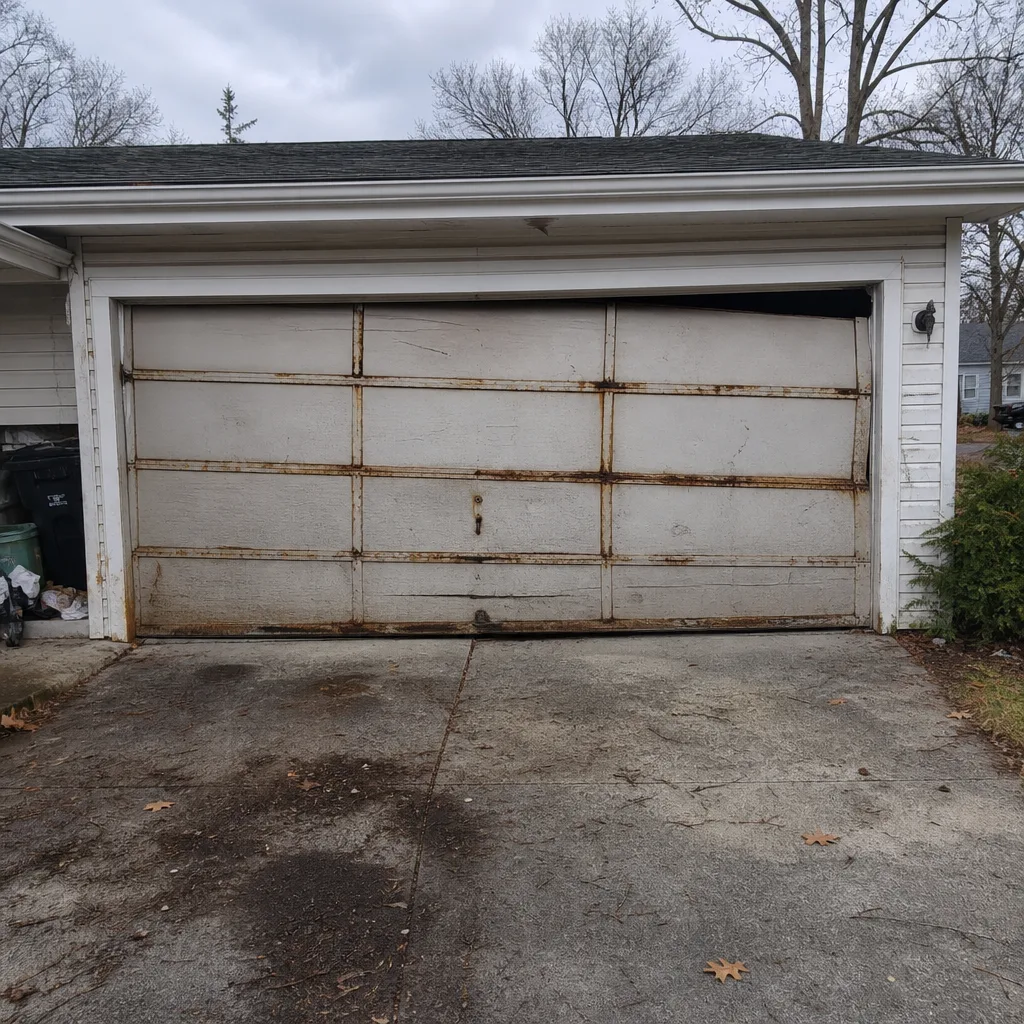 Before
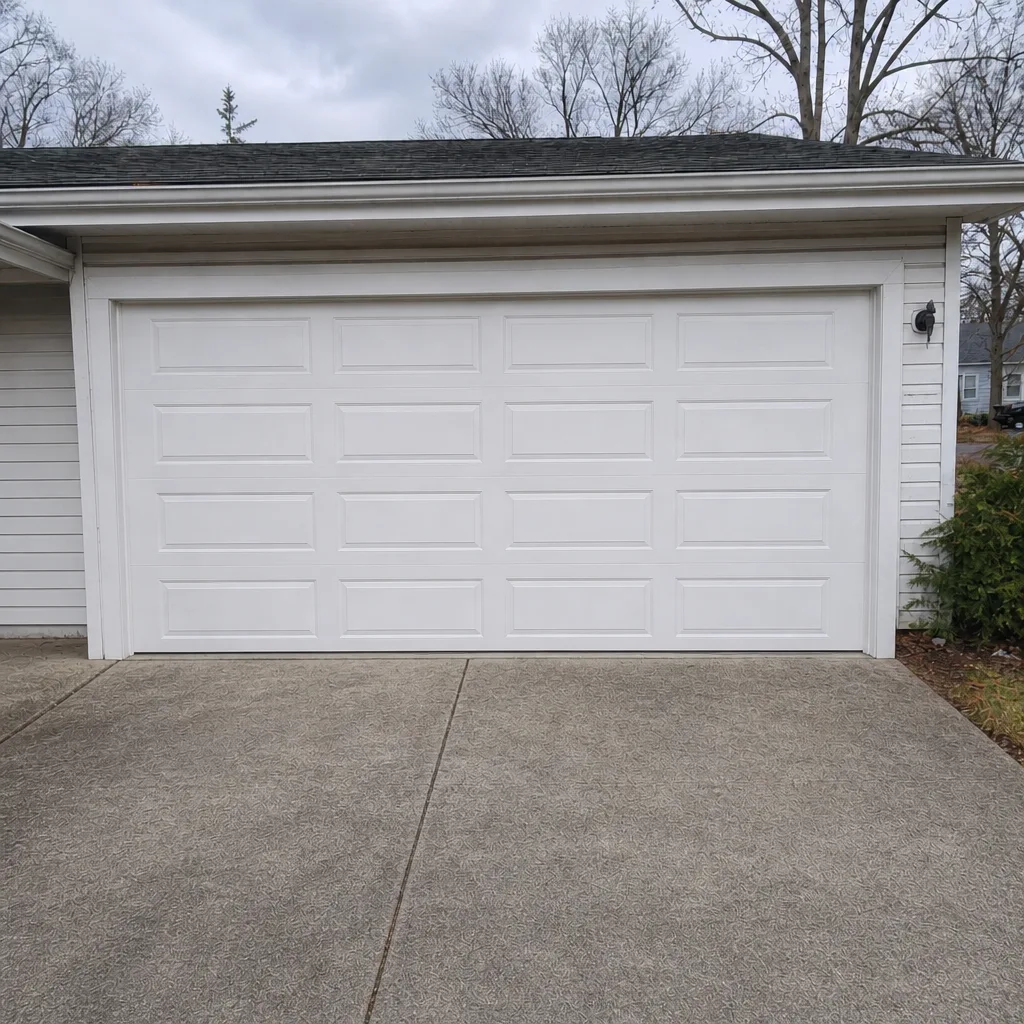 After
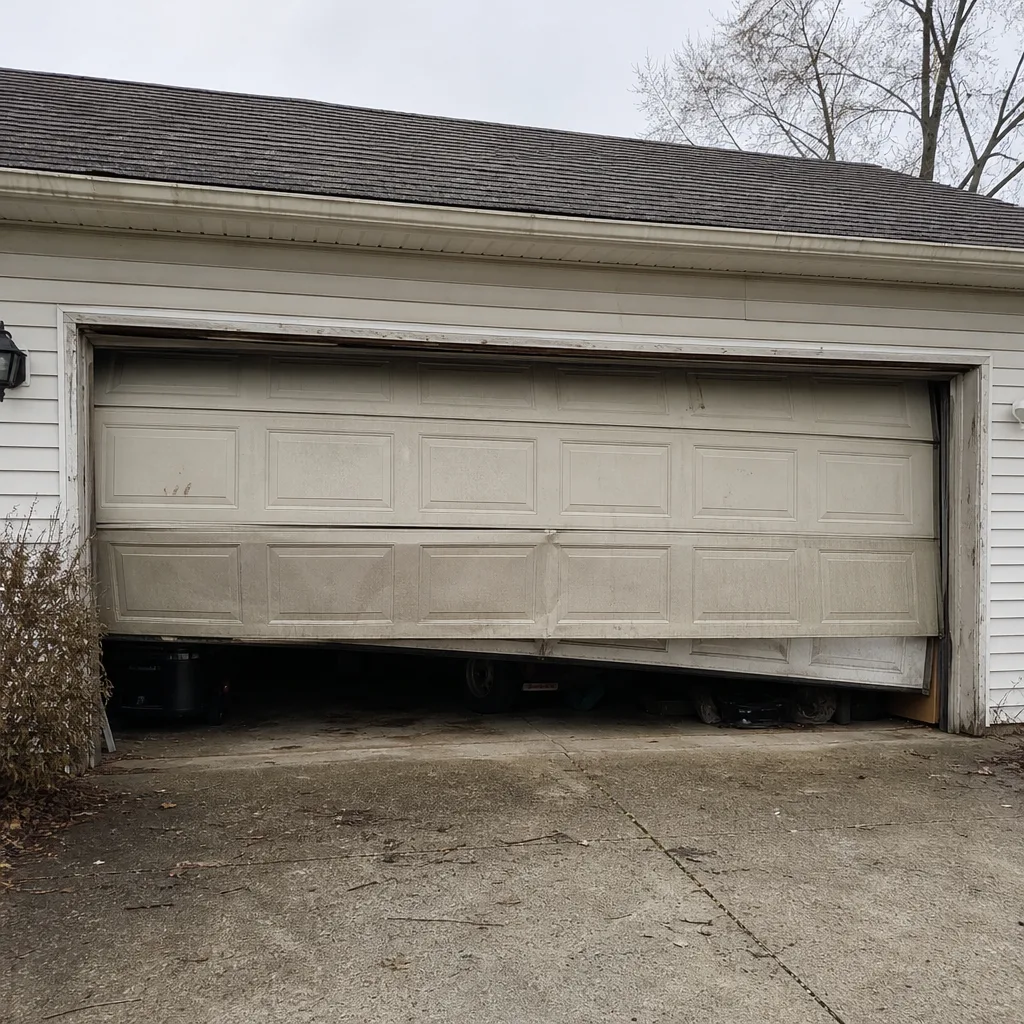 Before
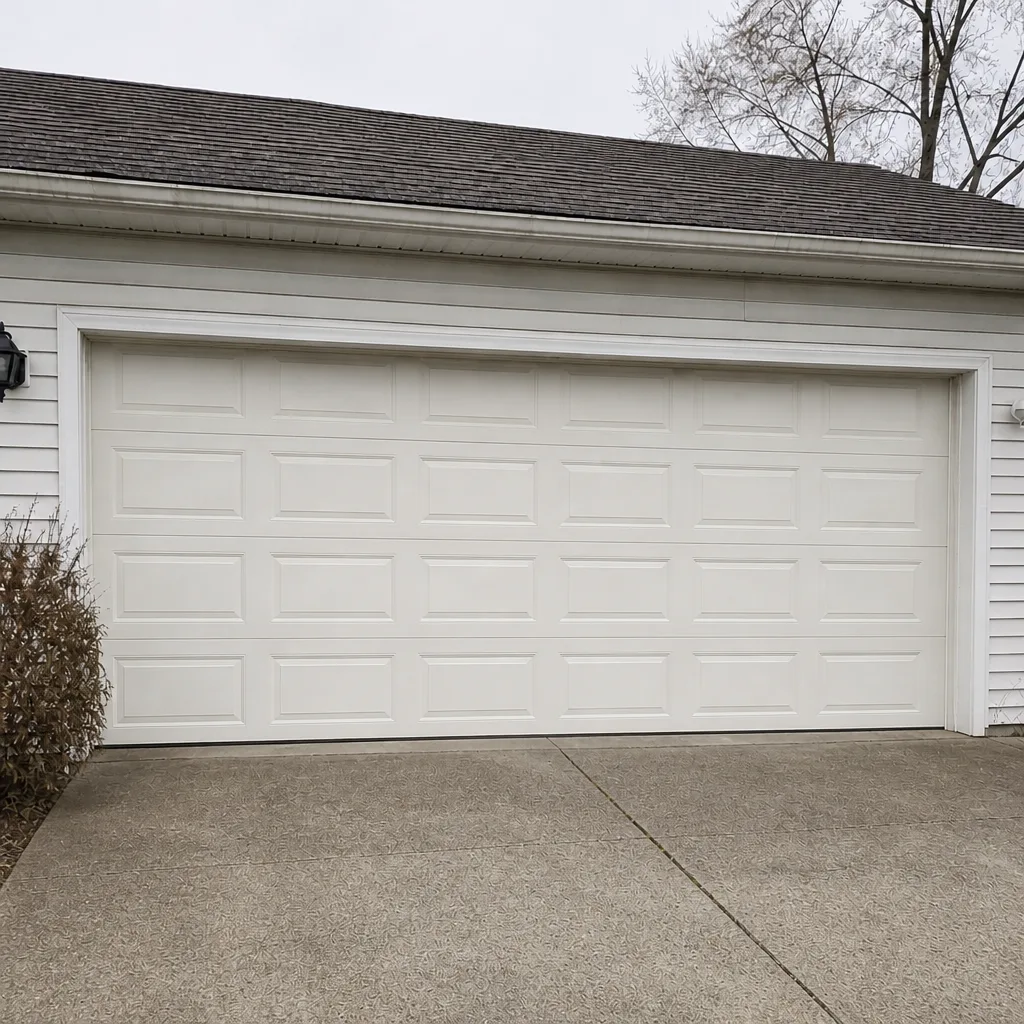 After
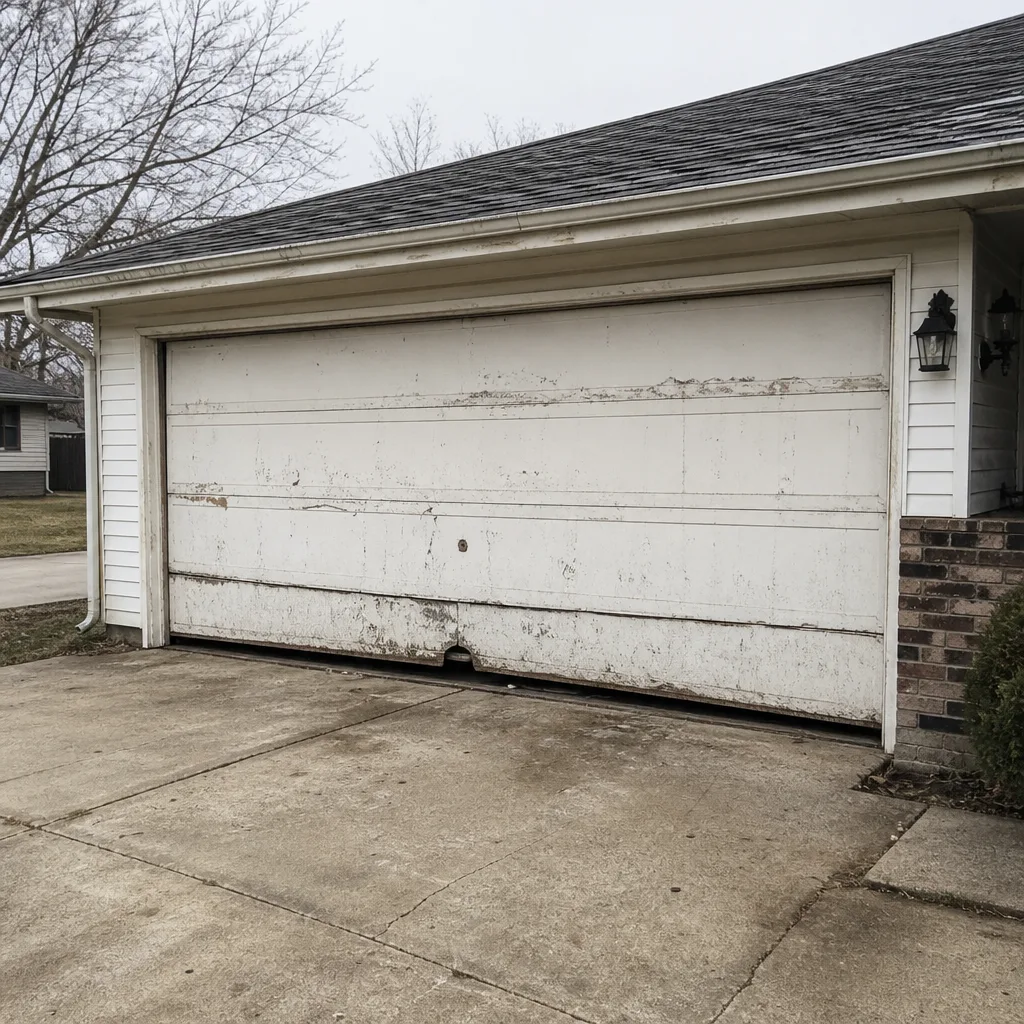 Before
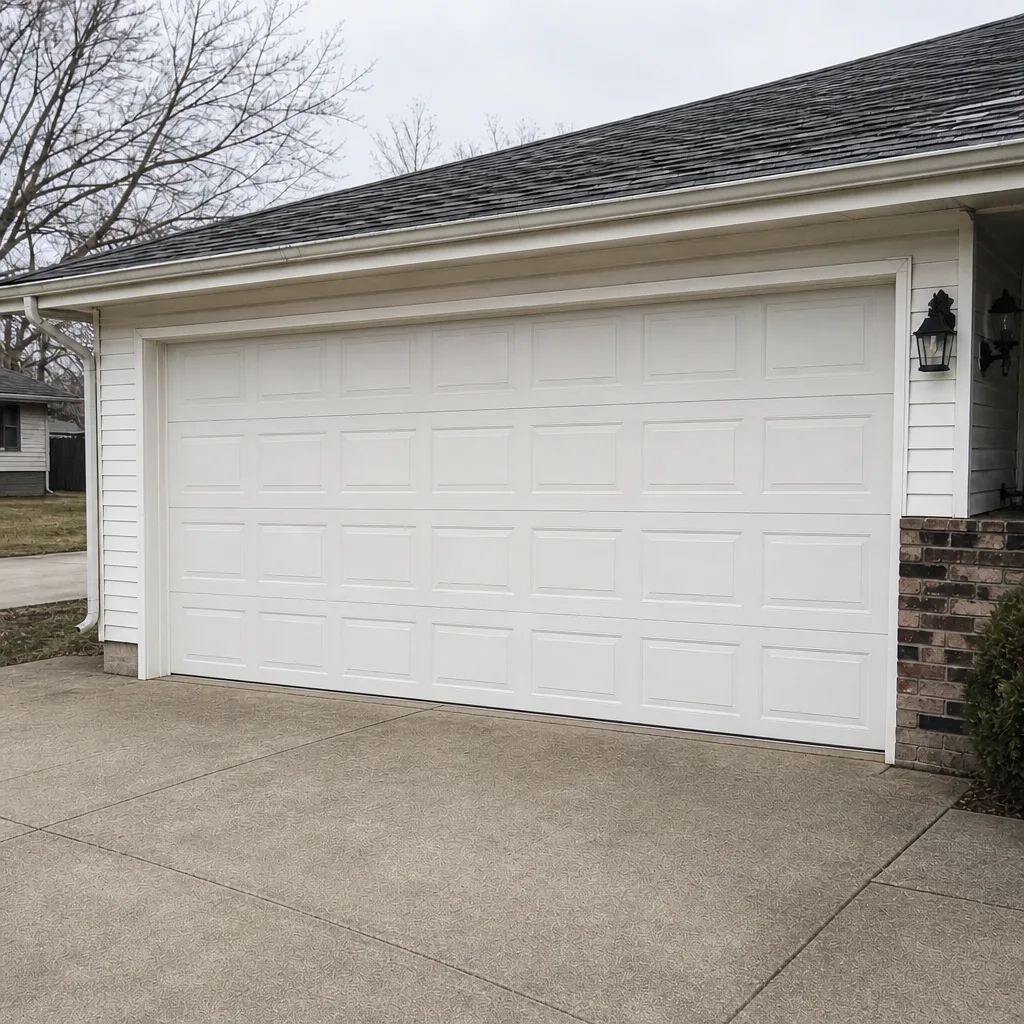 After
When to Call a Professional
Call a professional when the work involves a spring under load, a door that’s off its track, an opener issue you can’t troubleshoot, or any project that crosses the permit line. Structural changes – an opening resize, a header change, a new circuit – need a contractor who pulls the permit and coordinates the inspection. A broken spring, a cable that’s come off its drum, and a door that won’t close safely are all repair jobs for a technician, not a weekend project, because the parts are under enough tension to cause serious injury. Greenwood Garage Door Repair Pros offers free estimates in Greenwood – call (866) 876-9721. Estimates are free, the price is quoted and agreed before any work starts, and we work on the brands homeowners actually own: Amarr, Raynor, Wayne Dalton, Craftsman, LiftMaster, Chamberlain, Genie and Clopay. Our technicians have up to 13 years of experience, and we can tell you whether your project needs a permit before we ever get on the schedule.
Frequently Asked Questions
Usually not, if the door is replaced like-for-like and the rough opening and electrical aren’t touched. A permit is generally required when the rough opening changes, the header is altered, or a new opener circuit is added. Confirm with the City of Greenwood building department before work starts, since the answer depends on the scope of your specific project.
Not if you’re swapping an opener onto an existing outlet on the same circuit. If the installation requires a new outlet or new wiring, that electrical work generally requires a permit and an inspection. When in doubt, ask the building department – a quick call beats a surprise at home inspection.
The contractor doing the work is responsible for pulling the permit and coordinating the inspection. The homeowner’s job is to ask in writing whether a permit is required and to keep the permit number and inspection sign-off when the work is finished. Never assume a contractor has pulled a permit for a structural change; ask for the number.
It shows up as a pattern: a newer door with no permit record, framing that doesn’t match the original, an undocumented outlet on the electrical panel, or a safety reverse that doesn’t work. Buyers’ agents treat these findings as a negotiation point. A permit record in your file ends the conversation before it starts.
Not typically for a residential garage. The energy code doesn’t usually require a specific R-value in a garage door on a home. Insulation is a comfort and quiet-operation choice – warmer in winter, cooler in summer, quieter with the opener running – not a permit trigger, so choose it for how the garage will feel, not for code reasons.
We’re closed on Saturday, so call and we’ll book the repair for Sunday, our next dispatch day. We answer 24/7, and a call outside dispatch hours is booked into the next opening, Sunday through Friday, 7am to 7pm. Spring repair is one of the more hazardous garage door jobs, so don’t try to move or lift the door yourself while it’s broken – leave it closed until a technician can get to it.
We can help with the installation side and coordinate with the local code process on projects that require a permit. For a new door installation, the first step is usually a free measure and a written price; the permit question gets settled before the door is ordered, not after.
The Bottom Line
Garage door permits in Greenwood are mostly about structural and electrical change, not the door itself. Replacing a spring, opener, cable or panel is generally exempt. Changing the rough opening, altering the header, or adding a circuit generally isn’t. The city’s building department is the only authority on your specific project, so a short call before work starts is the cheapest insurance you’ll ever buy. Keep the permit, the inspection sign-off and the invoice in your records – the paperwork matters when you sell. And when the work involves a spring, a header, or anything structural, let a trained technician handle it. Call (866) 876-9721 for a free estimate. We answer 24/7. Fast dispatch from 7am to 7pm, Sunday through Friday.
Written by the team at Greenwood Garage Door Repair Pros.