
Last updated November 21, 2026
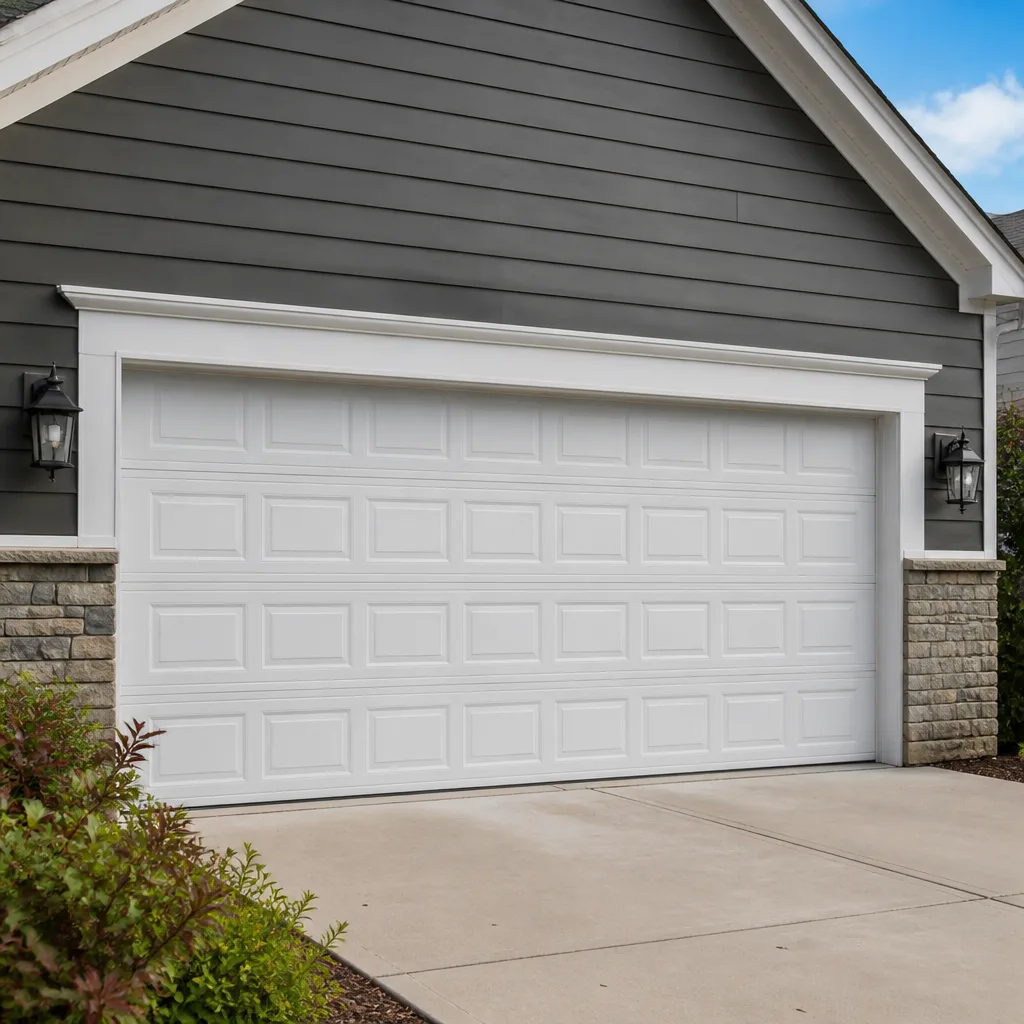 Raised-panel steel
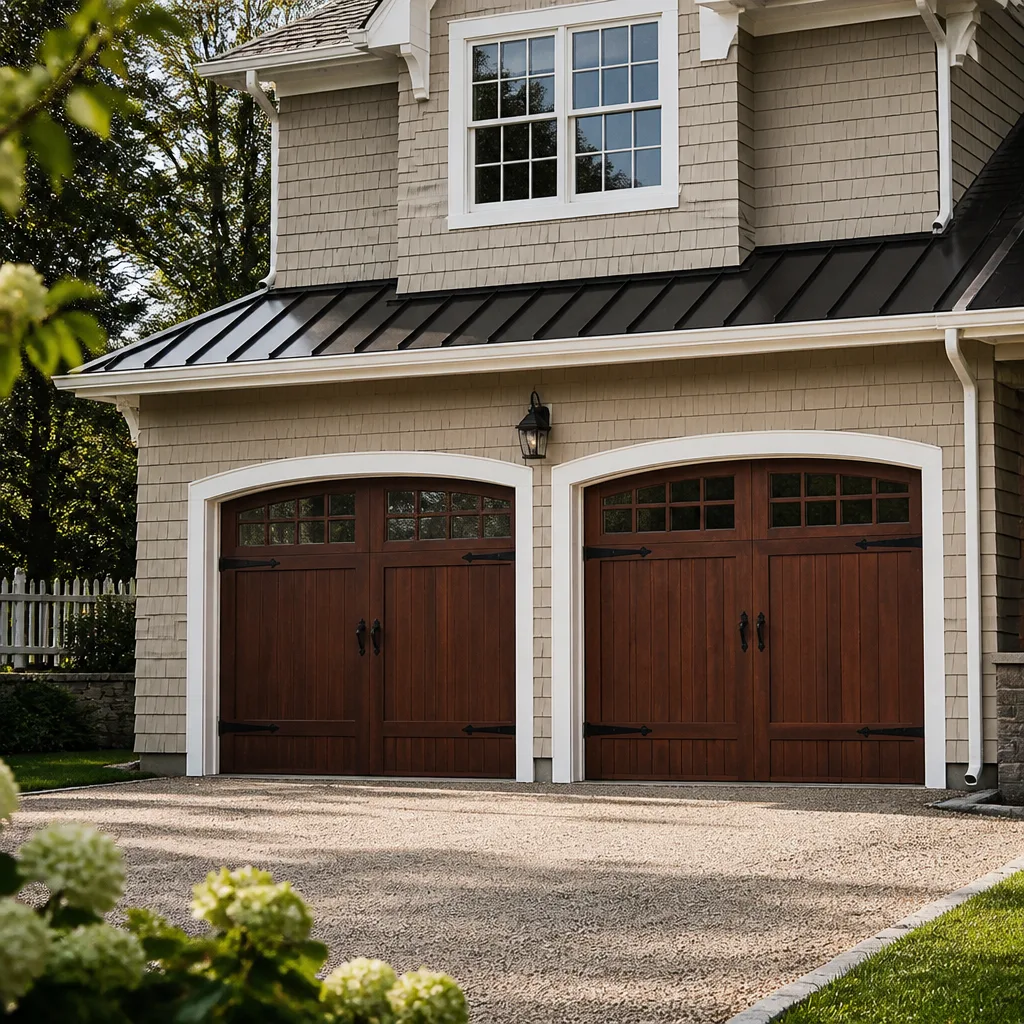 Carriage house
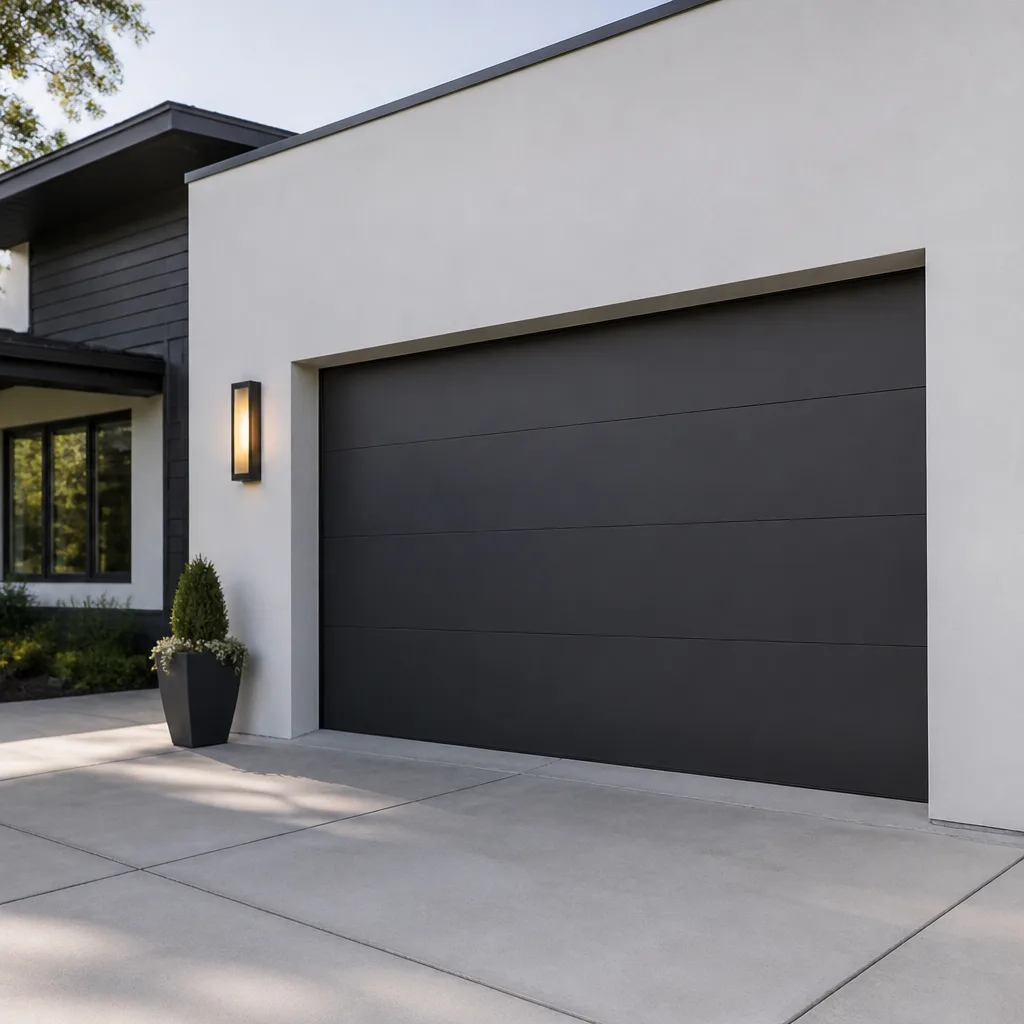 Modern flush
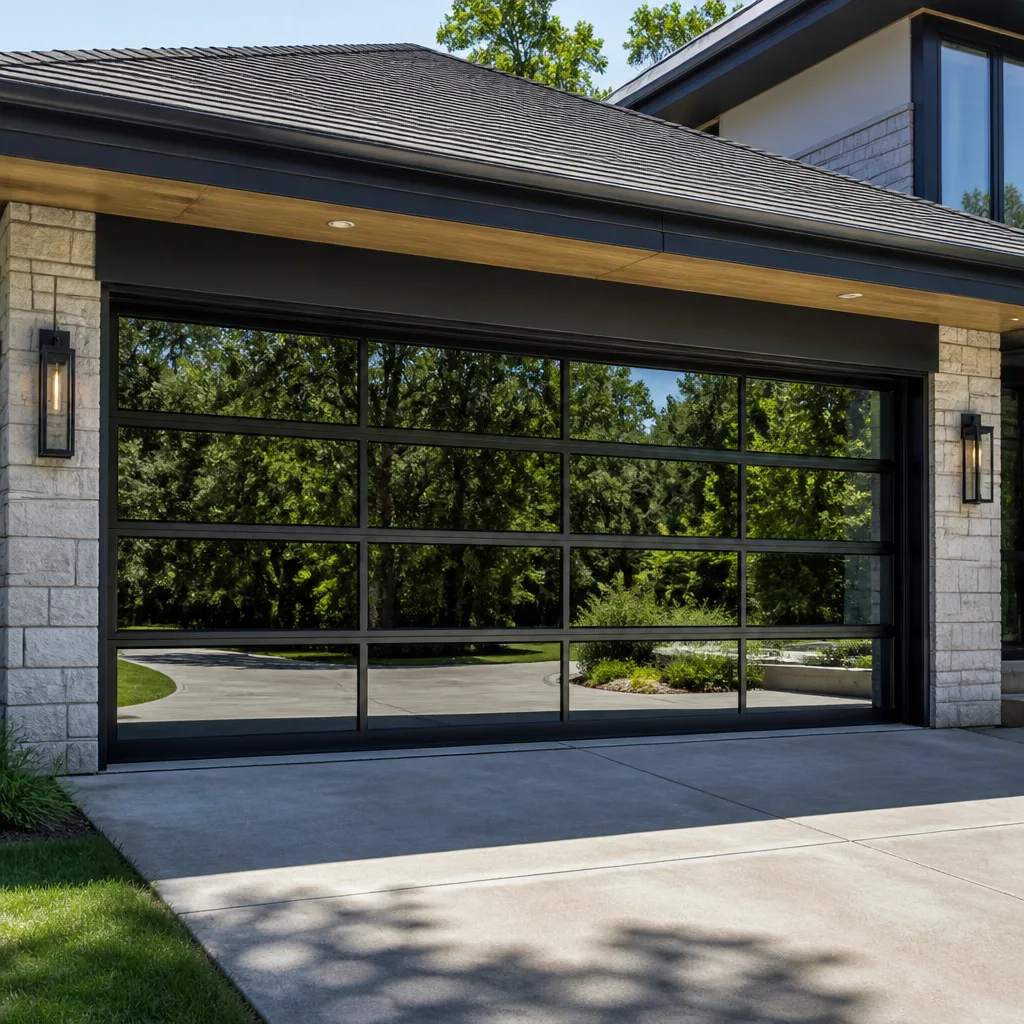 Full-view glass
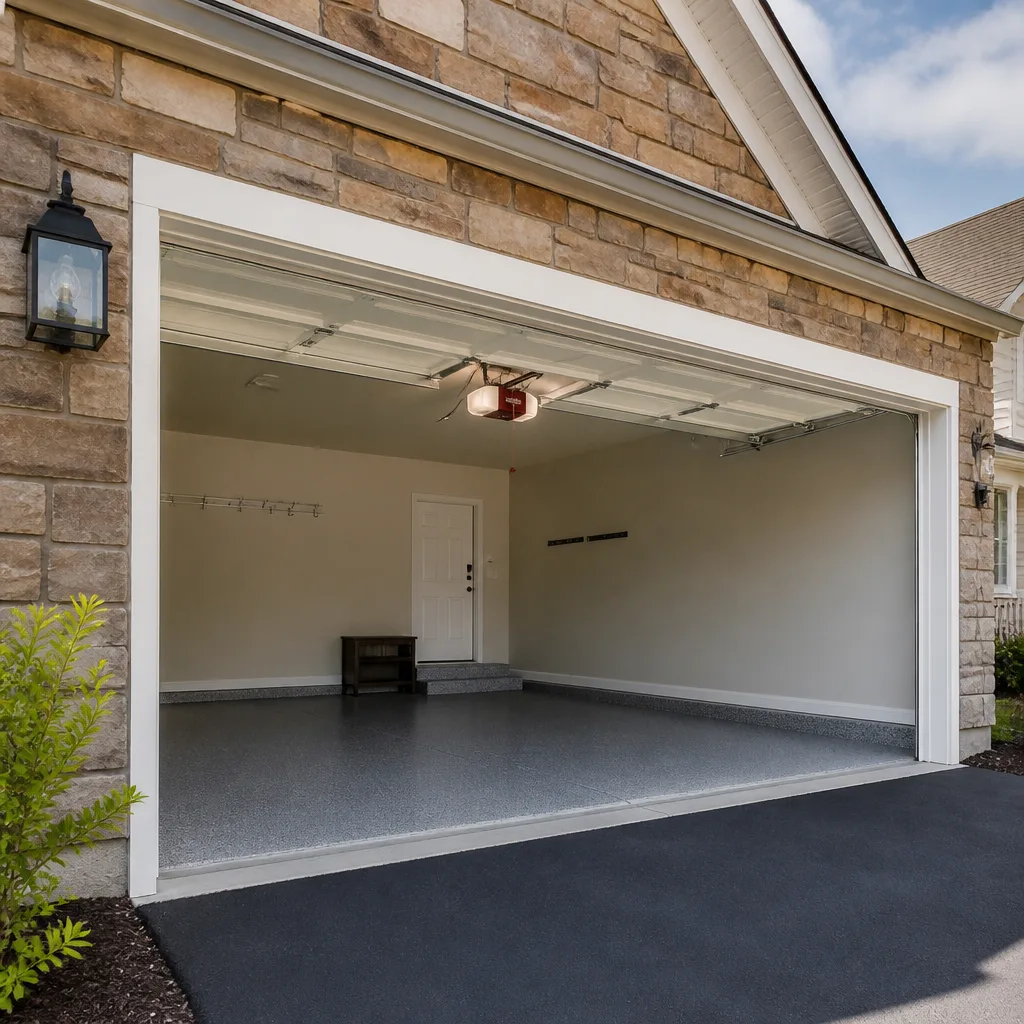 LiftMaster openers
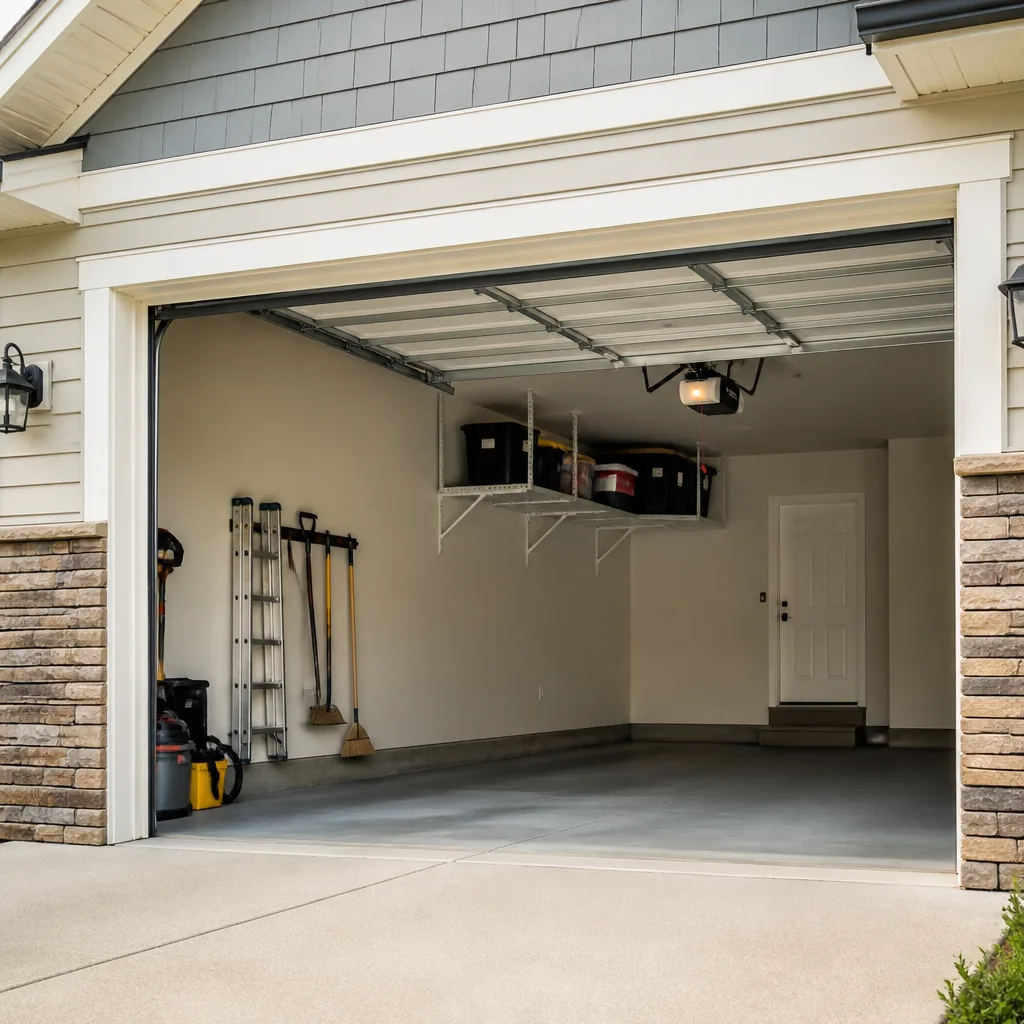 Chamberlain openers
Full 25-point door and opener safety check with every visit - springs, cables, rollers, tracks, and your LiftMaster or Chamberlain opener included
You get a price before we start. It does not change when the pro arrives.
Get your free estimateThe Complete Guide to Garage Doors in Greenwood
Most garage doors in Greenwood’s established subdivisions were installed during the 2000s building boom, which means a large share of the city is now hitting the 15-20 year mark where several components tend to fail within the same 12-month window. Springs weaken quietly, cables fray, bottom seals crack, and an opener that sounded fine last spring starts straining. The common misconception is that these are separate problems to fix one at a time. In practice, they’re usually the same door telling you the same thing. This guide walks the full lifecycle of a garage door in Greenwood – from the first creak to the case for replacement – and shows you how to decide whether to repair now, plan an upgrade, or pick up the phone.
Quick Answer
A garage door in Greenwood usually needs its first significant repair between 10 and 20 years after installation, with springs, cables, and bottom seals degrading fastest thanks to Indiana’s freeze-thaw cycle. Repairs can often be isolated to one component, but when you’re facing multiple failures on a builder-grade door in a single year, replacement is usually the better value. For anything involving springs or cables, call a professional – those parts are under extreme tension and are genuinely dangerous to handle.
Styles & brands we work with
- Raised-panel steel
- Carriage house
- Modern flush
- Full-view glass
- LiftMaster openers
- Chamberlain openers
Table of Contents
- How Indiana’s Freeze-Thaw CycleWears Out Greenwood Garage Doors
- Builder-Grade vs. Upgraded Doors in Greenwood Subdivisions
- The Garage Door Lifecycle: What Fails and When
- Repair or Replace? A Decision Tree for Greenwood Homeowners
- Brand-Specific Notes: LiftMaster, Chamberlain, and Genie Openers
- Why Spring Repair Is a Job for a Trained Technician
- Typical Garage Door Costs in Greenwood
- A Simple Maintenance Routine That Adds Years
How Indiana’s Freeze-Thaw Cycle Wears Out Greenwood Garage Doors
Greenwood sits in a climate that swings hard between freezing and thawing through the winter and early spring, and a garage door feels every degree of it. Most manufacturer timelines assume relatively stable temperatures. In central Indiana, those timelines run short because the moving parts of your door are expanding, contracting, and flexing far more than the spec sheet anticipates.
The cycle works like this: a garage door’s steel components contract in the cold and expand as temperatures rise. Over a single winter, the torsion springs absorb thousands of these micro-cycles, and each one adds a little more fatigue to the metal. A spring rated for a set number of open-close cycles will still wear out faster than that rating suggests when temperature swings are constant. The same principle affects the cables that run alongside the springs and the bottom seal that meets the concrete floor.
Here’s what tends to fail first in a Greenwood garage:
- Torsion springs. Fatigue accelerates through freeze-thaw. The most common failure point on any door.
- Cables. Repeated tension and relaxation fray the strands, and a frayed cable is a break waiting to happen.
- Bottom seals. The rubber or vinyl seal that meets the floor takes the brunt of moisture, ice, and grit. It cracks, then lets cold air and pests under the door.
- Rollers and hinges. Lubricant thickens in cold weather and thins in heat. Both extremes wear down metal rollers faster.
- Weatherstripping around the frame. The seal between the door and the jamb dries out and pulls away, which shows up as a draft or daylight around the edges.
What this means for you: don’t trust a manufacturer’s cycle rating as the whole story. If your Greenwood home’s door is older than about 10 years, pay attention to how it sounds and moves during the first cold snap and again in the summer heat. That’s when the strain shows. If something sounds different than it did last year, that’s your cue. When you’re ready for a closer look, our garage door repair team can sort out what’s worn and what’s still got life in it.
Builder-Grade vs. Upgraded Doors in Greenwood Subdivisions
If your home sits in one of Greenwood’s established subdivisions – Stones Crossing, Westwood Estates, or along the Bargersville Road corridors – there’s a good chance your original door was builder-grade. That’s not a knock on the door. It’s simply what builders install: a functional, cost-conscious door sized to the opening and rated for everyday use. The catch is that builder-grade doors tend to wear faster and have a shorter service life than the upgraded residential doors many homeowners eventually swap in.
Understanding the difference helps you make smarter repair decisions.
Builder-grade doors
- Lighter-gauge steel or thinner panels
- Standard springs rated for a lower cycle count
- Basic rollers and hinges
- Painted rather than factory-finished surfaces that fade faster
- Designed to meet a price point, not to last three decades
Upgraded residential doors
- Heavier steel or insulated panels (more structural rigidity)
- Higher-cycle springs rated for more open-close operations
- Better rollers, heavier hinges, and stronger hardware throughout
- Factory finishes and insulation that hold up better to temperature swings
- Longer service life with fewer repairs along the way
So how do you know which one you have? Look at the door thickness and weight. Builder-grade doors are often noticeably thinner, and you can usually flex a panel slightly with one hand. Open and close the door and listen: a lighter door with basic hardware sounds tinny, while an upgraded door moves with a heavier, steadier feel.
Why it matters: if you’re facing a repair on a builder-grade door that’s already near the 15-20 year mark, the dollars you put into it may not stretch as far. An upgraded door in Greenwood isn’t only about appearance – it’s a longer service life and fewer return visits from a technician. When the time comes to talk replacement, brands like Clopay and Amarr offer a range of residential models that fit standard subdivision openings without any structural change.
The Garage Door Lifecycle: What Fails and When
Every garage door follows a predictable arc. Knowing where your door sits on that arc is the single best way to avoid being caught off guard by a failure. Think of it in phases.
Years 0-5: The quiet years
A new door needs little beyond routine maintenance – lubrication, a visual check, and keeping the tracks clear. Springs and cables are fresh. This is also the window to establish a habit of inspecting the door once or twice a year.
Years 5-10: Small things start to surface
Rollers begin to wear, and you might notice a little more noise. Bottom seals start to age. Lubrication becomes more important, and the first minor adjustments – like a track that’s drifted slightly out of alignment – often come up. These are cheap fixes if you catch them early.
Years 10-15: The first significant repairs
This is where Greenwood’s climate stress shows. Springs may need attention, cables can start to show wear, and an opener that was fine a few years ago might start struggling with a door that’s grown slightly heavier as its hardware wears. On a builder-grade door, this is often when a homeowner faces the first real repair decision.
Years 15-20: Multiple components in the same window
Here’s the crux of the lifecycle. Around the 15-20 year mark, several parts wear out within the same 12-month span – springs, cables, rollers, a seal, maybe the opener. This clustering is what makes older doors feel like money pits, but the reality is simpler: it’s a coordinated wear-out, not a mystery. This is the decision point where replacement often makes more financial sense than stacking repairs.
Years 20+: End of life for most builder-grade doors
An upgraded residential door may keep going well past 20 years with maintenance. A builder-grade door usually won’t. When the cost of the next round of repairs starts approaching a meaningful fraction of a new door, it’s time to weigh a replacement.
Repair or Replace? A Decision Tree for Greenwood Homeowners
This is the question most Greenwood homeowners are really asking. Work through these questions in order, and the answer usually becomes clear.
Step 1: What failed?
- Is it a single component – one spring, one cable, one roller, a seal, or the opener? Then a repair is almost always the right first move.
- Is it the door structure itself – bent panels, a warped door, a cracked section, or a frame that’s failed? Then replacement is more likely.
- Is it the opener only, on a door that otherwise works fine? Then an opener repair or replacement handles it, and the door stays.
Step 2: How old is the door?
- Under 10 years: repair.
- 10-15 years: repair, unless the panel or structure is compromised.
- 15-20 years: weigh the total cost of repairs against the age of the door.
- Over 20 years on a builder-grade door: lean toward replacement.
Step 3: How many failures are clustered?
- One failure this year: repair.
- Multiple failures in one 12-month window: the door is in its wear-out phase, so replacement is the better value.
Step 4: Is safety compromised?
- Broken spring, frayed cable, or a door that slams or won’t stay up: stop using the door and treat it as a safety issue. Call for a professional inspection.
- Door that binds in the tracks or comes off the rollers: safe to operate only after a technician looks at it.
One honest note about the third question: a garage door seldom fails all at once. Once several components fail within a short window on an older door, the odds are high you’re simply at the natural end of its service life. That doesn’t mean you have to replace the door the moment the first spring breaks – it means you should do the math when the second or third repair comes calling. If you’d rather have someone walk it through with you, our team can look at the door and give you a straight answer without an upsell.
Brand-Specific Notes: LiftMaster, Chamberlain, and Genie Openers
The opener bolted to your ceiling is probably one of three brands: LiftMaster, Chamberlain, or Genie. Each has its own common failure points, and knowing them helps you describe what’s happening when you call for help. It also means a technician who works on your actual brand, rather than guessing, is the difference between a quick fix and a return visit.
We’re trained on LiftMaster, Chamberlain, Genie, Clopay, Amarr, Wayne Dalton, Craftsman, and Raynor – the brands homeowners actually own – so your equipment doesn’t need to be sent to a “brand-specific” specialist elsewhere.
LiftMaster openers
LiftMaster is the commercial-leaning arm of the Chamberlain family, and it’s common in Greenwood homes. The typical failure points are the safety sensor alignment, a stripped drive gear in older units, and the logic board when the unit won’t respond. Remote and keypad pairing issues are common too, and they’re usually a quick fix rather than a replacement.
Chamberlain openers
Chamberlain shares much of the same technology family as LiftMaster, so many of the failure points overlap. On Chamberlain units, the tilt sensor or wall control and the travel limits are frequent culprits when a door won’t close properly. A door that reverses on its own or stops halfway is often a sensor or limit issue rather than a motor failure.
Genie openers
Genie has a long history in residential garages, and its older screw-drive and chain-drive units are still moving doors in Greenwood. Typical issues include a worn drive belt or chain, a failing capacitor, and safety sensor problems. On Genie units, a door that hums but doesn’t move is usually a gear or capacitor issue rather than a dead motor.
Regardless of brand, most opener problems fall into a few categories: the drive mechanism, the sensors, the logic board, or the power supply. If you’re not sure which, describe the symptom – “it hums but won’t lift” or “it closes and comes right back up” – and a technician can usually narrow it down fast. Most repairs are completed in a single visit.
Why Spring Repair Is a Job for a Trained Technician
Springs power your entire garage door. When they’re under tension, they’re holding the full weight of the door, and when one breaks, the door becomes unbalanced and unsafe. A torsion spring can be wound to several hundred pounds of force, and a broken spring releases that energy suddenly. This isn’t a component anyone should attempt to replace without training and the right tools – and it’s the single most common reason people get hurt working on their own garage doors.
What a spring replacement actually involves:
- The technician secures the door and releases the tension safely using winding bars.
- The old spring is removed and measured for the correct replacement – springs are matched to door weight, not just to the door’s size.
- The new spring is installed and wound to the manufacturer’s specified number of turns.
- The door is balanced, and a balance check is run to make sure it lifts and holds correctly.
- The opener is tested and, if needed, its limits are adjusted for the new spring tension.
Spring prices are quoted per spring, and if both springs are original to a door of similar age, they usually fail within months of each other – so a matched pair is often replaced together. That’s why we quote one spring and a pair separately rather than giving you one range for both.
If you’ve heard a loud snap from the garage, or the door feels extremely heavy when you lift it manually, treat it as a spring issue and don’t run the opener. Using the door with a broken spring strains the opener motor and can cause the door to come down unexpectedly. For a closer look, our garage door spring repair service covers both diagnosis and replacement, and the price is agreed in writing before any work starts.
Typical Garage Door Costs in Greenwood
Costs vary by door size, weight, and the component being replaced, but the table below gives a realistic range for common work in the Greenwood area. These are typical estimates – the written estimate sets the final price.
- Spring replacement (single spring): $180-$340
- Spring replacement (matched pair): roughly double the single-spring range
- Cable repair or replacement: quoted per job by estimate
- Roller replacement: quoted per job by estimate
- Bottom seal replacement: quoted per job by estimate
- Opener repair: quoted per job by estimate
- Opener replacement: quoted per job by estimate
- Panel or door section replacement: quoted per job by estimate
- Full door installation: measured and quoted, since door size and model vary
On installation and full replacement, the price depends on the door you choose, its size, and the condition of your opening, so that work is measured and then quoted in writing rather than promised in a range. For anything urgent – a broken spring or a door that won’t close – the price is still agreed before work begins. Emergency work isn’t priced as a premium; it’s set the same way as any other job, per job by the written estimate.
One thing worth repeating: we quote before we start. If the estimate changes once the door is open, we’ll tell you why and get your approval first. Call (866) 876-9721 for a free estimate in Greenwood.
A Simple Maintenance Routine That Adds Years
A little routine care goes a long way, especially in Greenwood’s climate. Here’s what you can safely do yourself, and what to leave to a professional.
What you can do
- Check the balance once a season. Disconnect the opener and lift the door to about halfway. A balanced door holds there with little effort. If it drifts down or feels heavy, call a technician.
- Lubricate moving parts. Apply a garage-door-rated lubricant to the hinges, rollers, and track (metal rollers only) a couple of times a year. Skip the springs – they don’t need grease.
- Keep the tracks clean. Wipe them down and check for debris, and make sure nothing’s stored leaning against them.
- Inspect the bottom seal. Look for cracks or gaps to the floor. If the seal is failing, air and moisture get in.
- Test the safety reverse. Place a small object in the door’s path and confirm the door reverses on contact. This is your most important safety feature.
Note: test the safety reverse while the door is closing from a safe position, and never stand under a moving door.
What to leave to a professional
- Spring, cable, and drum work – any component under tension
- Realigning a door that’s come off its track
- Adjusting door balance or opener travel limits beyond the basics
- Any repair where the door moves erratically or makes a loud noise
Common Mistakes to Avoid
- Continuing to run a door with a broken spring. This strains the opener and makes the door unsafe. A broken spring means the garage door needs to come out of service until it’s fixed.
- Greasing the torsion springs. It attracts dirt and does nothing useful. Lubricate hinges, rollers, and metal tracks instead – and leave the springs themselves alone.
- Ignoring a slow reverse. A safety sensor or limit that’s slightly off is easy to adjust. Waiting lets it become a habit, and then a failure.
- Replacing the opener when the door is the problem. On an older door, a struggling opener is often just lifting a heavier, worn door. Fix the door first, then judge the opener.
- Patching a builder-grade door past its service life. If you’re on the third repair in twelve months and the door is approaching 20 years, replacement will almost always be the better value.
- Skipping the climate test. In Greenwood, do your inspection after the first cold snap and again in summer – that’s when freeze-thaw stress shows up.
- Assuming any door brand works the same. LiftMaster, Chamberlain, and Genie units fail in slightly different ways. Give the make and model when you call so the technician arrives prepared.
See the difference
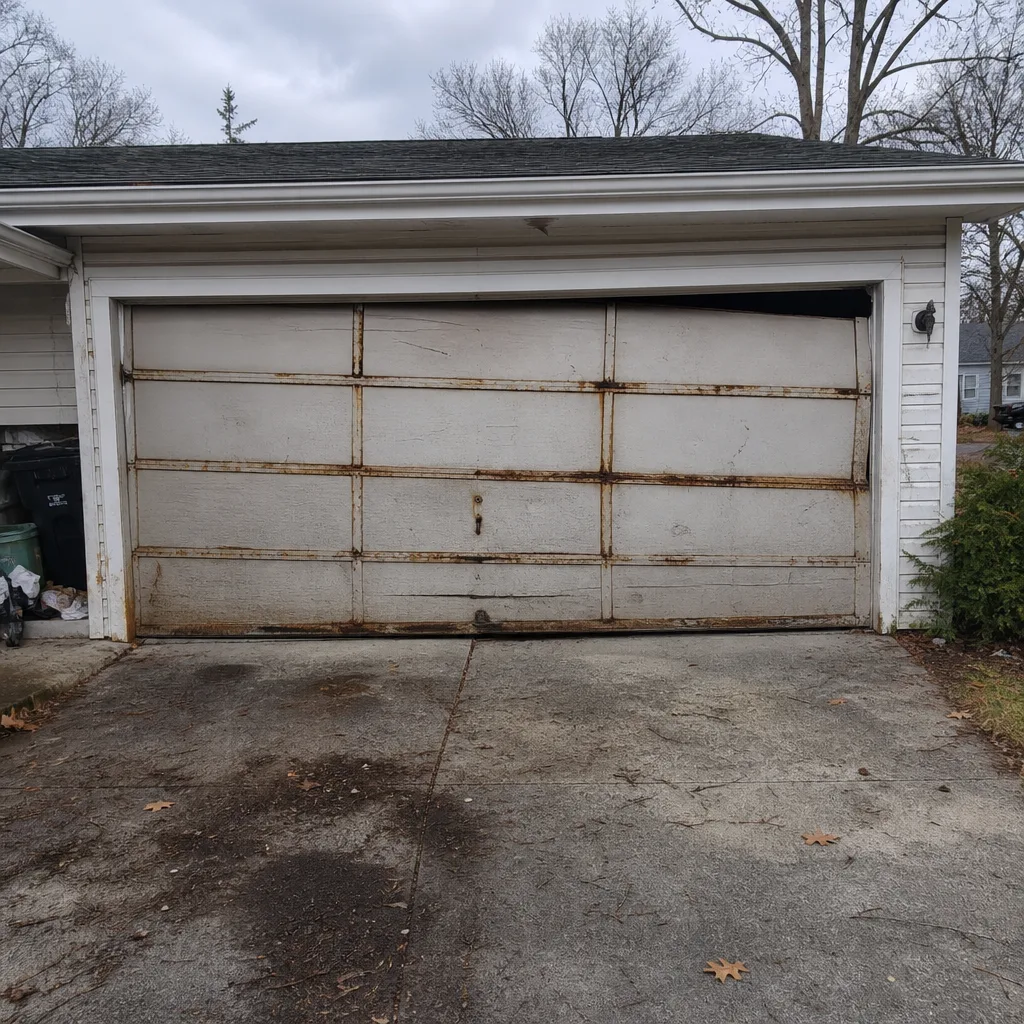 Before
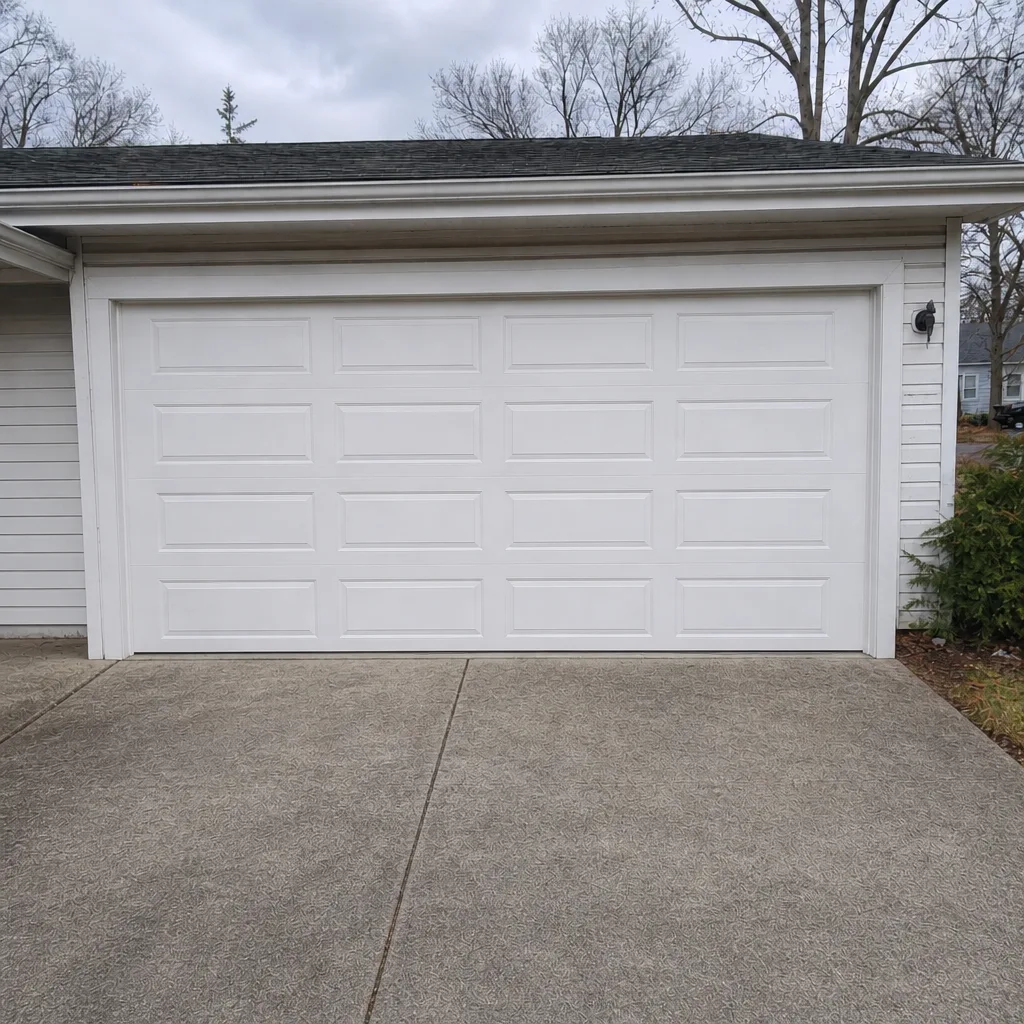 After
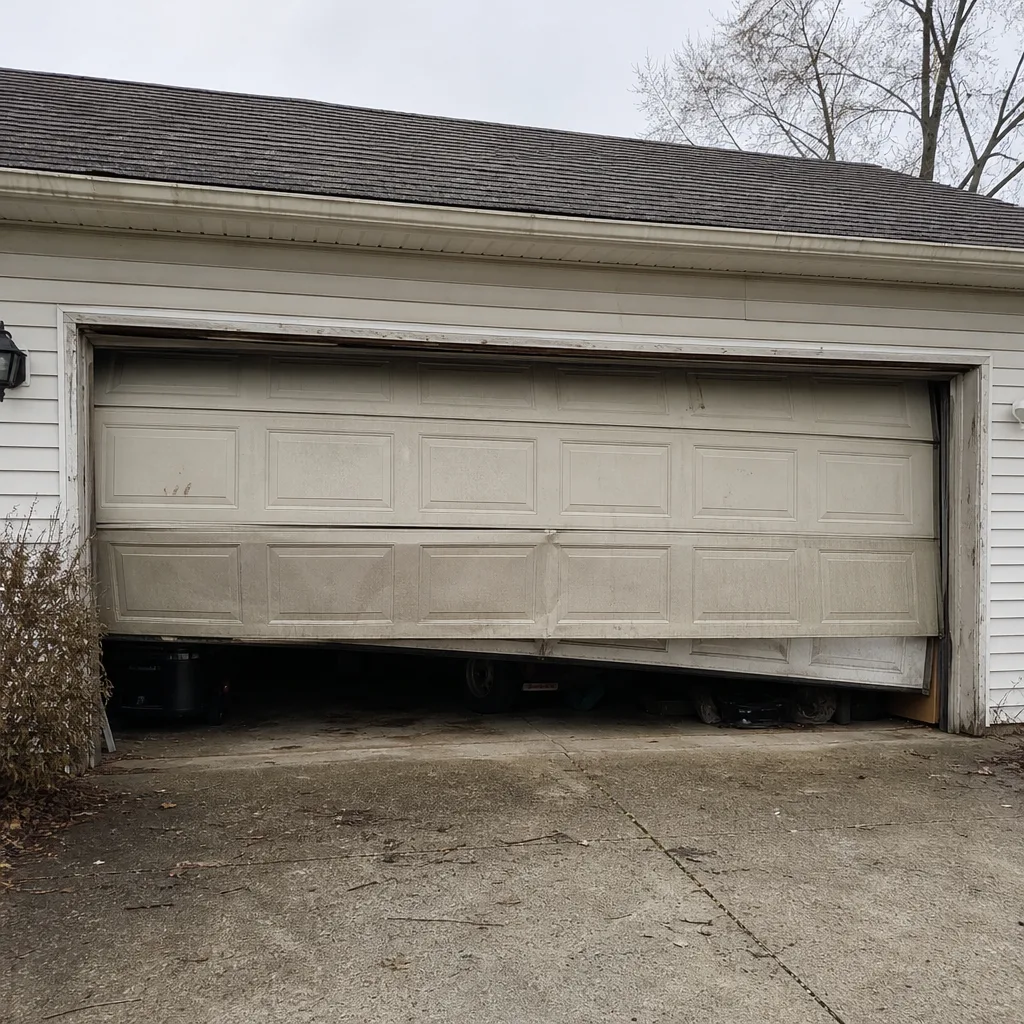 Before
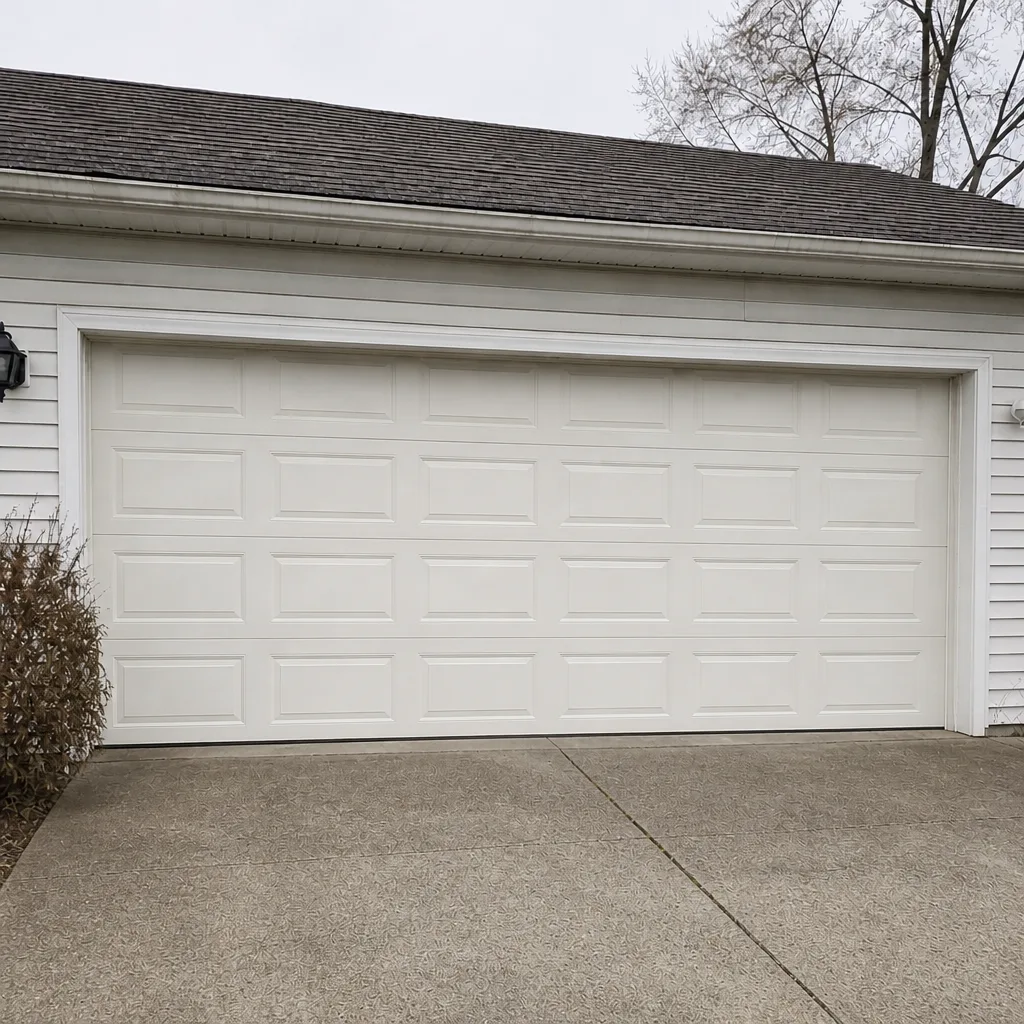 After
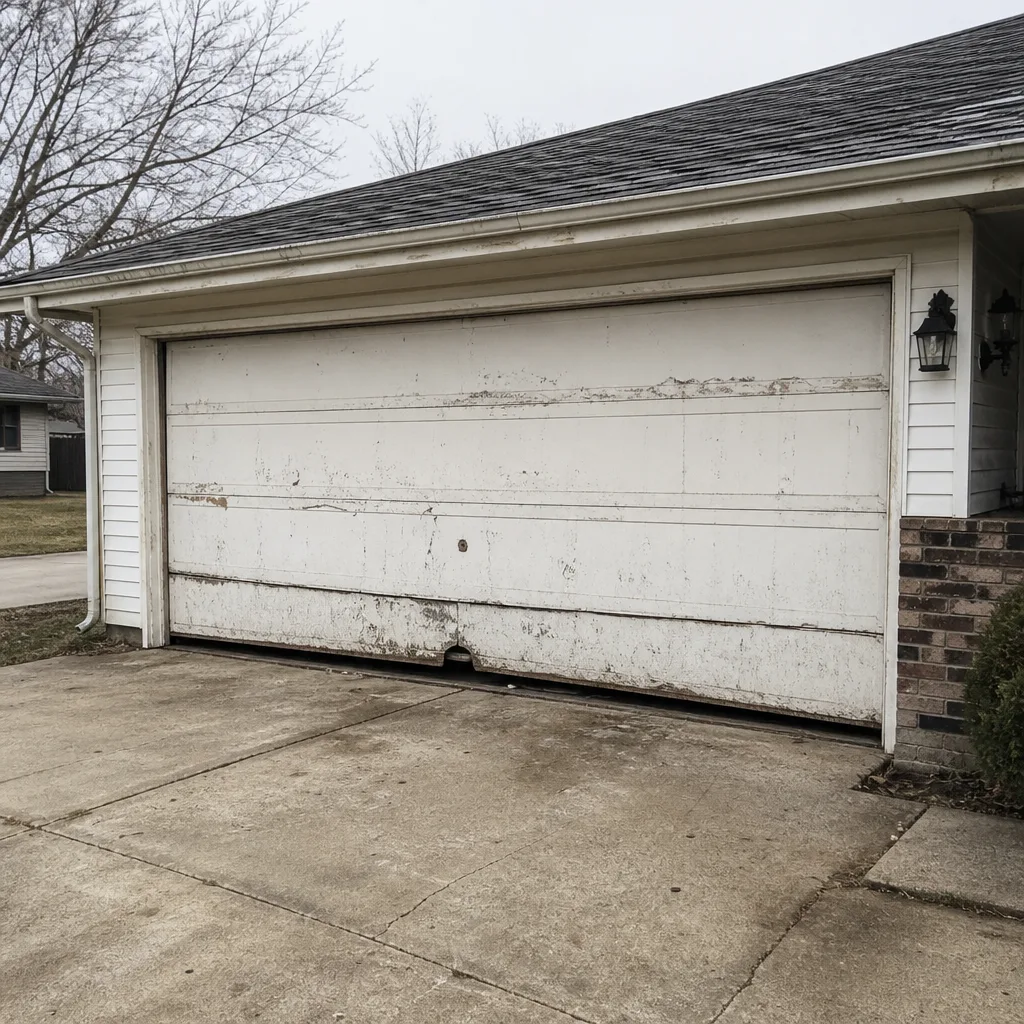 Before
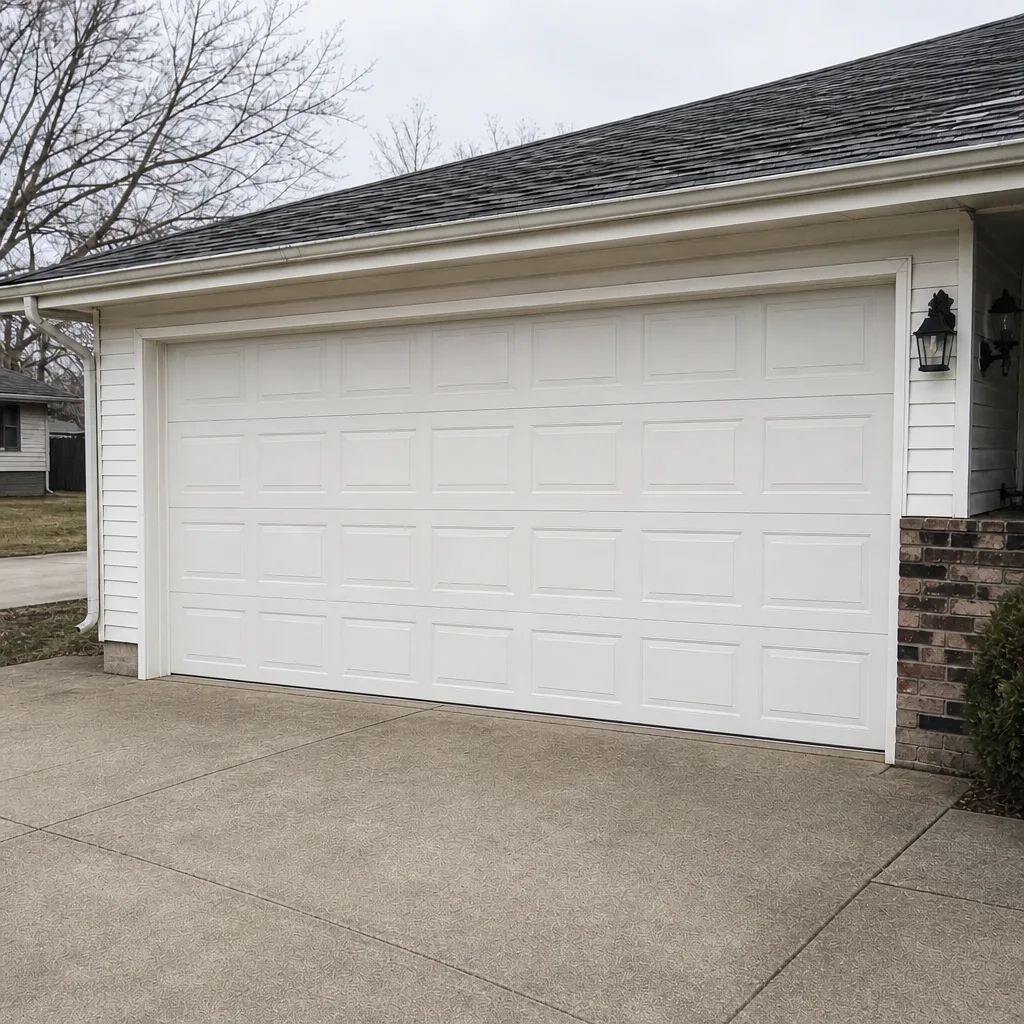 After
When to Call a Professional
Some garage door jobs are fine for a weekend, and some are a genuine safety call. The dividing line is tension and weight. A broken spring, a frayed or snapped cable, a door that won’t stay up, a door that comes off its track, or any loud noise followed by a sudden failure should get a technician, not a trip to the hardware store. The same goes for a door that slams down or closes and immediately reverses – those are safety-feature failures you shouldn’t ignore, and they often need someone who knows your opener brand. If your door won’t open and you need your car out, that’s also an urgent call. Greenwood Garage Door Repair Pros offers free estimates in Greenwood – call (866) 876-9721. We answer 24/7, and fast dispatch runs from 7am to 7pm.
Frequently Asked Questions
A builder-grade door in Greenwood typically lasts 15-20 years, while an upgraded residential door can go longer with maintenance. Indiana’s freeze-thaw cycle speeds up wear on springs and cables, so expect the first significant repairs somewhere between 10 and 15 years. Call (866) 876-9721 for a free assessment of where your door stands.
Spring repair in the Greenwood area typically runs $180-$340 for a single spring, and a matched pair costs about twice that since both are usually replaced together. The written estimate sets the final price, and you’ll have it before any work begins. Call (866) 876-9721 for a free estimate.
In most cases, yes – same-day service is available for repairs. Call (866) 876-9721. We answer 24/7, and fast dispatch runs from 7am to 7pm, Sunday through Friday. A call outside dispatch hours is booked into the next opening.
No – if a repair is straightforward, the price you’re quoted is what you pay. If the inspection uncovers something that changes the scope, the technician will explain it and get your approval on a revised written estimate before doing any additional work. Call (866) 876-9721 for a free estimate.
The local professionals we connect you with are licensed and insured as their state requires. We work on all eight major garage door and opener brands – LiftMaster, Chamberlain, Genie, Clopay, Amarr, Wayne Dalton, Craftsman, and Raynor – so your equipment is handled by someone who knows it. Call (866) 876-9721 with your make and model.
It depends on why. A dead remote battery, a tripped opener reset, or an obstructed safety sensor are safe to check yourself. A broken spring, snapped cable, or door that feels unusually heavy is not – stop using the door and call a professional. Call (866) 876-9721 for a same-day repair.
The Bottom Line
Garage door problems in Greenwood follow a pattern, and that pattern is predictable once you know it. Builder-grade doors from the 2000s building boom are now in their 15-20 year wear-out phase, and Indiana’s freeze-thaw cycle shortens component life compared to the manufacturer specs. The single most useful habit is paying attention to how your door sounds and moves after the first cold snap and again in summer. Isolated failures are worth repairing. Clustered failures on an older, builder-grade door usually call for replacement. Anything involving springs or cables calls for a technician, not a home repair. If you’re not sure where your door lands, call and we’ll walk you through it.
From broken springs to full replacements, one call covers it all. For a free estimate in Greenwood, call (866) 876-9721. We answer 24/7, with fast dispatch from 7am to 7pm, Sunday through Friday. You can also learn more about how we work at Greenwood Garage Door Repair Pros.
Written by the team at Greenwood Garage Door Repair Pros.