
Last updated November 21, 2026
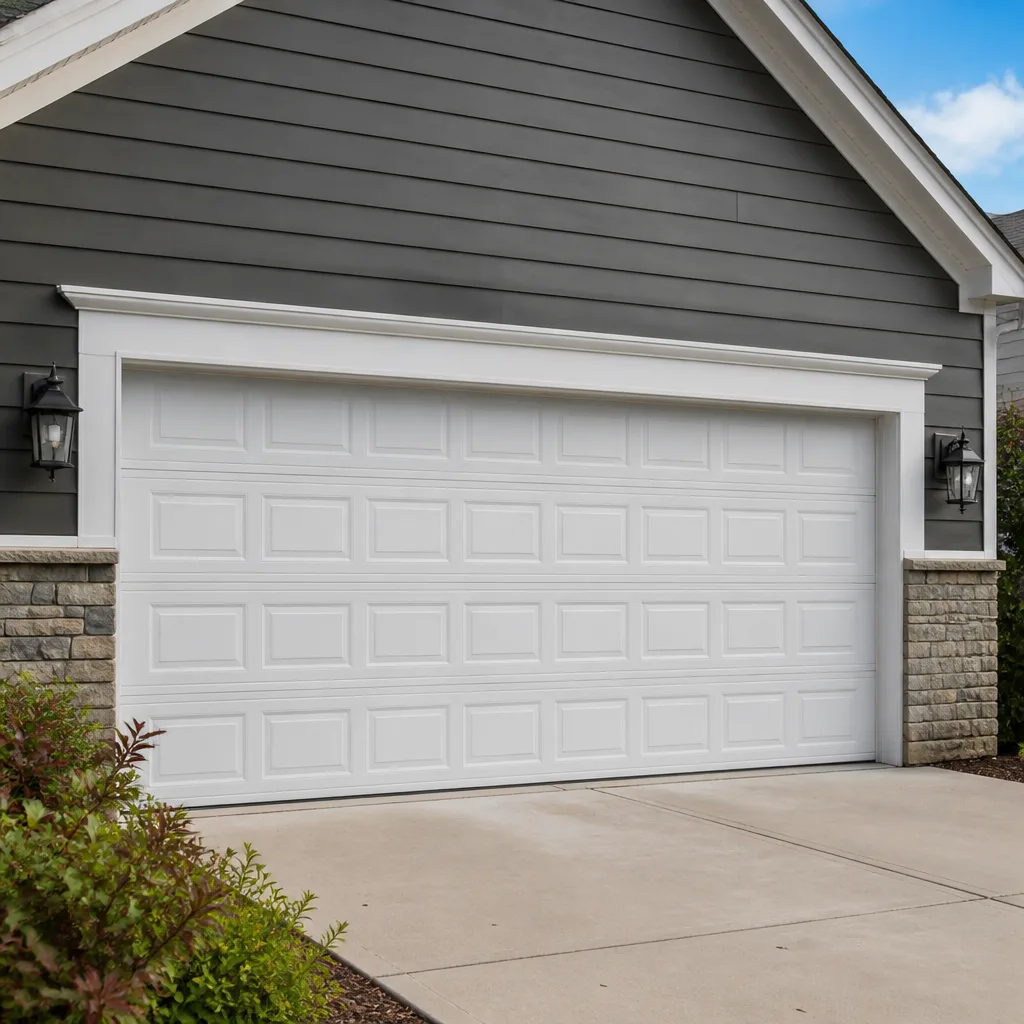 Raised-panel steel
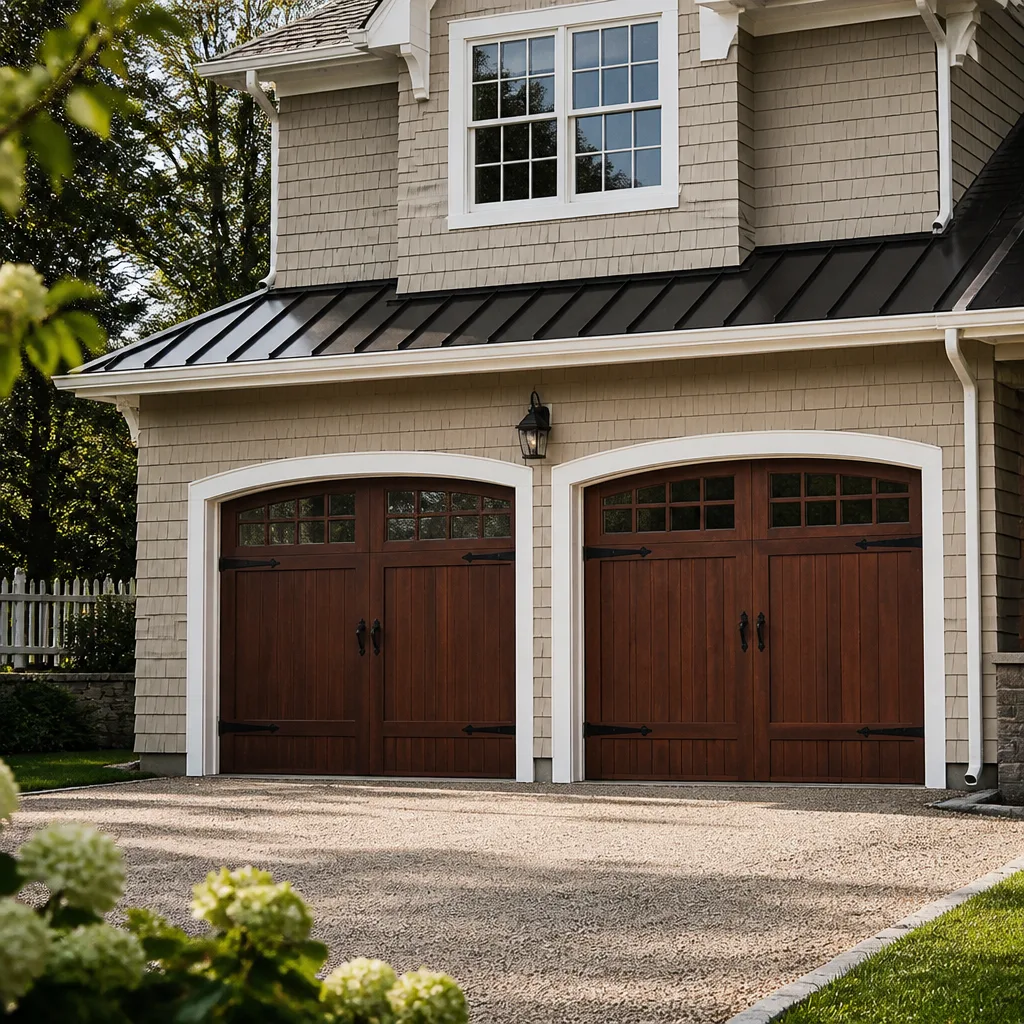 Carriage house
 Modern flush
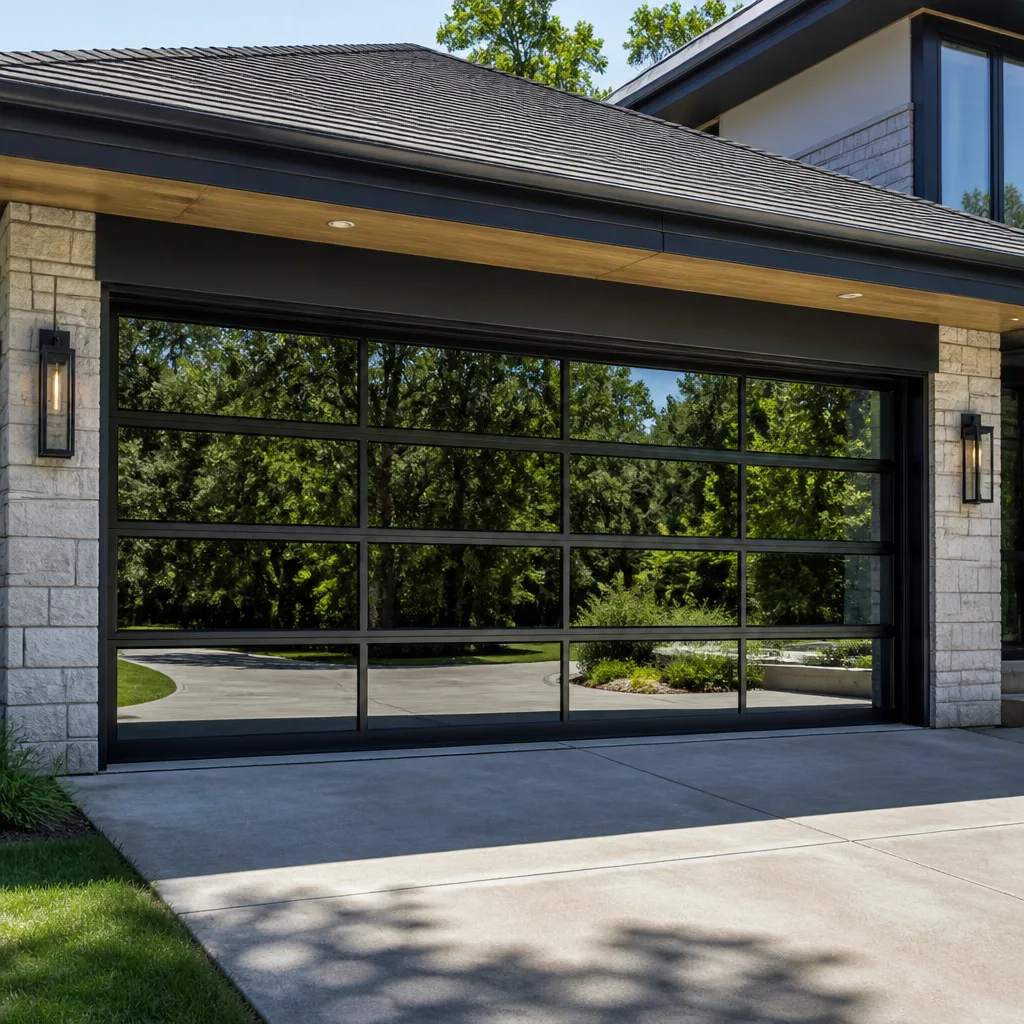 Full-view glass
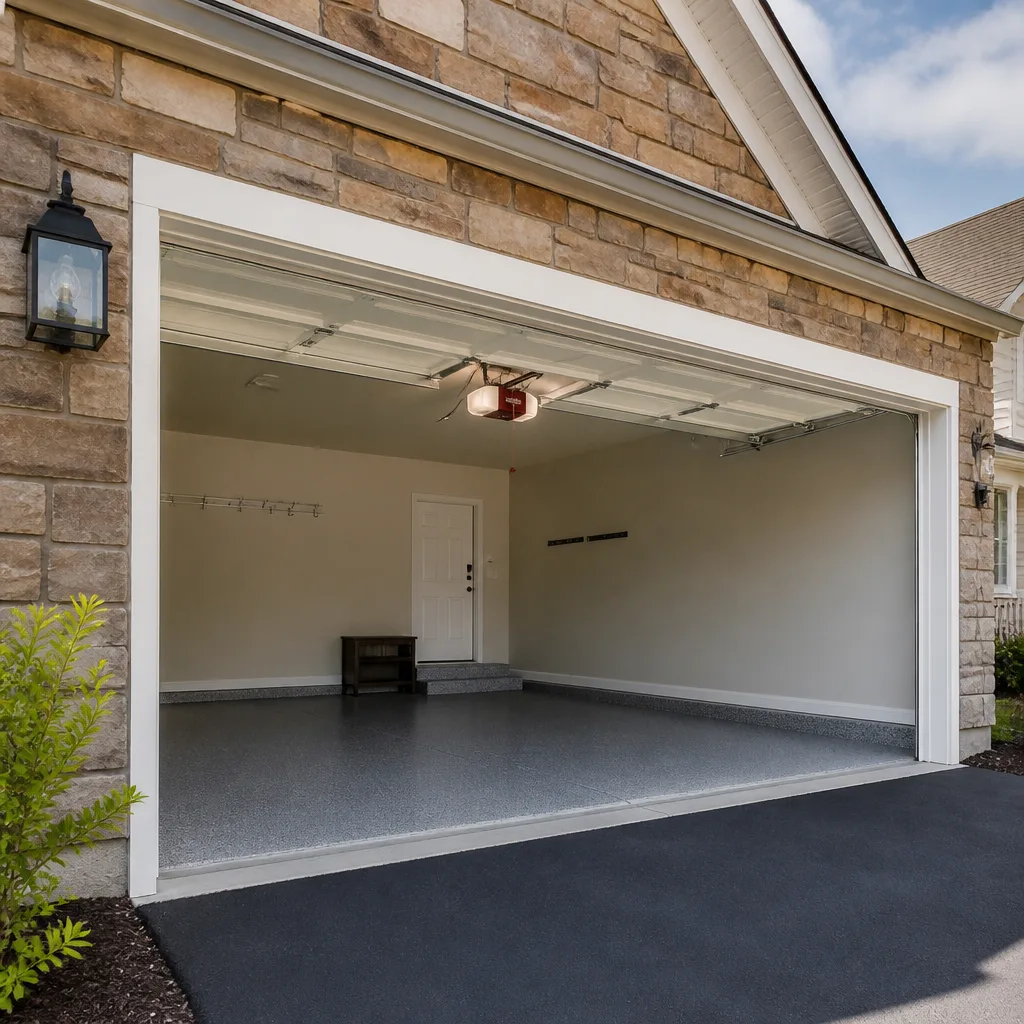 LiftMaster openers
 Chamberlain openers
Full 25-point door and opener safety check with every visit - springs, cables, rollers, tracks, and your LiftMaster or Chamberlain opener included
You get a price before we start. It does not change when the pro arrives.
Get your free estimateDIY vs Professional Garage Door: The Greenwood Homeowner’s Decision Guide
Garage door torsion springs store enough energy to cause serious injury when they release, and that isn’t a liability disclaimer at the end of a service page. It’s physics. A wound torsion spring carries hundreds of pounds of stored torque, held in place by two set screws and a winding cone. Release that tension incorrectly and the result is a broken wrist or worse, faster than a reflex can react.
But here’s what most DIY-versus-professional guides get wrong: they treat the whole garage door system as if it’s one hazard level. It isn’t. The spring system and cables are genuinely dangerous. The rollers, sensors, remotes, seals and tracks around them are not. Conflating the two leads Greenwood homeowners into one of two costly mistakes: paying a professional for a task that takes ten minutes and a can of lubricant, or attempting a spring job that should never be DIY. This guide draws the line clearly, task by task, so you know exactly where your skill level is enough and where it isn’t.
Quick Answer
Most routine garage door maintenance in Greenwood is safe for a capable homeowner, including lubrication, safety sensor alignment, remote programming, bottom seal replacement and track cleaning. Spring replacement, cable replacement and any repair that requires the spring system to be wound or unwound are not safe for DIY and belong with a trained technician, because a sudden release of stored spring tension can cause severe injury. If your door is stuck, making loud noises, or hanging unevenly, call a professional before touching it.
Styles & brands we work with
- Raised-panel steel
- Carriage house
- Modern flush
- Full-view glass
- LiftMaster openers
- Chamberlain openers
Table of Contents
- Which Garage Door Tasks Are Safe to DIY in Greenwood?
- Which Repairs Should Never Be a DIY Project?
- The Cost-Benefit Math: What You Actually Save vs. Risk
- How Indiana’s Licensing Rules Change the DIY Risk Calculation
- When a Starter Job Reveals a Bigger Problem Mid-Task
- Greenwood Housing, Weather and Garage Door Wear
- Why the Brand on Your Door Changes the DIY Decision
- Common Mistakes to Avoid
Which Garage Door Tasks Are Safe to DIY in Greenwood?
Lubrication, sensor alignment, remote programming, bottom seal replacement and track cleaning are all safe for most homeowners to handle themselves. These tasks don’t touch the spring system or cable tension, and they don’t require you to lift the door’s weight. They do require you to know where the danger zones are and to leave them alone, even when a task feels like it’s leading you toward them.
Here’s the full list of tasks that are reasonable DIY projects for a Greenwood homeowner with basic tools and a willingness to read instructions:
- Lubrication. A garage door has hinges, rollers, and a torsion tube that benefit from a proper garage door lubricant, not household oil or WD-40. Two or three times a year is enough for most doors. Never lubricate the tracks themselves.
- Safety sensor alignment. The two small sensors at the bottom of the door track should face each other at the same height. If the door reverses for no obvious reason, one sensor is probably knocked out of alignment or blocked by a cobweb. A quick wipe and a gentle nudge back into position usually fixes it.
- Remote and keypad programming. Whether you have a LiftMaster, Chamberlain, Genie or Craftsman opener, the programming sequence is printed in the opener’s manual or available through the manufacturer. This is safe, quick, and one of the most common calls we get that homeowners can handle themselves.
- Bottom seal replacement. The rubber or vinyl seal along the bottom edge of the door keeps water, insects, and cold air out. It slides out of a channel or is held by fasteners. Replacing it is a fifteen-minute job and doesn’t involve any load-bearing components.
- Track cleaning. Garage door tracks collect dust, grit, and in Greenwood’s pollen season, plenty of debris. A dry cloth and a quick wipe is all that’s needed. Never use lubricant inside the track itself.
- Visual inspection. A monthly look at springs, cables, rollers and hinges catches small problems early. Look for a spring with a visible gap in the coil, a frayed cable, or a roller that’s cracked or worn flat. You’re looking, not touching.
The common thread: none of these tasks requires you to wind, unwind, or come into contact with a tensioned spring or cable. That’s the line. If a task on your list steps over that line, stop and read the next section before you go any further.
Which Repairs Should Never Be a DIY Project?
Torsion spring replacement, extension spring replacement, and cable replacement should never be attempted by a homeowner, no matter how many tutorial videos you’ve watched. The garage door spring system holds the full weight of the door, and when that tension releases unexpectedly, the stored energy can break bones, cause deep lacerations, or worse. This isn’t a skill gap; it’s a hazard that exists regardless of how careful you are.
The tasks that require a trained technician are:
- Torsion spring replacement. The spring above the door is wound to hundreds of pounds of torque. Replacing it requires two winding bars, a specific winding sequence, and the knowledge to recognize when a spring is about to fail mid-procedure.
- Extension spring replacement. Older doors use springs that stretch along the horizontal tracks. They fail with a violent snap and can travel across a garage. Removal requires the door to be fully raised and secured first, which creates its own hazard.
- Cable replacement. The cables that lift the door are under enormous tension. A cable that slips off a drum while you’re handling it can whip through the garage. Cables are replaced in matched pairs and require the springs to be wound or unwound as part of the job.
- Any repair requiring the spring to be wound or unwound. This includes adjusting spring tension, replacing a torsion tube, or converting an older door to a new spring system. Once you touch the winding cone, you’re in professional territory.
- Off-track door recovery. A door that has jumped its track is carrying unbalanced weight along a path it wasn’t designed to follow. Forcing it back into place can bend panels, snap cables, or collapse the door onto whoever is standing under it.
- Panel replacement on a door under tension. Removing a section of a sectional door means unloading the spring system to compensate for the lost weight. That’s a spring job in disguise.
When your Greenwood garage door needs this kind of work, our garage door spring repair service handles the spring and cable work with the equipment and experience the job requires. Our technicians have up to 13 years of experience, and they know the difference between a spring that’s failing and one that’s already gone.
We won’t give you a step-by-step on how to wind a spring yourself, and no reputable garage door company should. The margin for error is too small, and the consequence of getting it wrong is too serious.
The Cost-Benefit Math: What You Actually Save vs. Risk
For a low-risk task like a roller replacement, DIY can save you most of the labor cost and the job is genuinely manageable. For a spring job, the money you save by doing it yourself is small next to the cost of an injury, a ruined door, or a second repair that undoes the first. The math isn’t the same across every repair, and that’s exactly the point.
Let’s look at how the tradeoff plays out for the most common garage door tasks in Greenwood.
| Task | Typical Pro Cost | DIY Savings | Risk Level |
|---|---|---|---|
| Roller replacement | Modest labor charge plus parts | Most of the labor | Low – no tensioned components touched |
| Bottom seal replacement | Small | Almost all of it | Low – seal is not load-bearing |
| Sensor alignment or remote programming | Small | Almost all of it | Low |
| Spring repair (single spring) | Roughly $180-$340 | You avoid the labor cost but take on the full spring risk | High – serious injury possible |
| Cable replacement | Comparable to spring work | Small relative to the risk | High – cables are under tension |
| Opener repair or replacement | Varies by unit | Some, but brand-specific wiring is easy to get wrong | Moderate to high |
A single torsion spring typically runs $180 to $340 in Greenwood, and a matched pair is usually replaced together, so a pair costs about twice that. Notice the gap between the $150-ish territory of a roller job and the $300-ish territory of a spring job. That’s the whole decision in one comparison. Roller work is a DIY candidate because the savings are real and the exposure is close to zero. Spring work is not, because the savings are a few hours of labor and the exposure is a hospital visit.
Here’s the other piece most homeowners miss: when we quote a repair, the price is agreed before any work starts. The written estimate sets the final price. That matters when you’re comparing a DIY task you can genuinely handle against a professional repair you’d rather hand off.
How Indiana’s Licensing Rules Change the DIY Risk Calculation
Indiana doesn’t require a statewide residential contractor license for garage door work, which means if you do a repair yourself there’s no permit or inspection step to catch a mistake before it becomes a safety problem. The trade is generally unlicensed at the state level, so the protection you get comes from the person you hire, not from a municipal office looking over their shoulder.
That changes the DIY calculation in a way most guides don’t mention.
In some states, a homeowner pulling a permit for a garage door project means a municipal inspector reviews the work after completion. That inspection catches obvious defects: a poorly set spring, cables routed wrong, a door that doesn’t balance. In Indiana, that layer tends to be absent for typical garage door repairs. There’s no municipal backstop between your work and the door’s operation.
What that means in practice:
- If you install a spring backwards or leave it under-wound, no one will flag it before the door starts behaving oddly.
- If you replace a cable at the wrong length, the door will lift unevenly, and that uneven load goes straight back into the spring system.
- If you finish a repair and the door doesn’t sit against the floor correctly, the problem won’t get caught until the door has run for weeks, and the wear that accumulates in the meantime is on you.
Hiring a local professional shifts the accountability. The technician who does the work carries their own licensing and insurance as the state requires, and the estimate is set before work begins. If something isn’t right after a professional repair, you have a business to call back. If a DIY repair goes wrong, you don’t.
This is also why brand familiarity matters more than most homeowners realize. A technician who is trained on Amarr, Wayne Dalton, Raynor, and the rest of the eight major brands knows the specific spring configuration and cable routing for your door. They also know when a problem is characteristic of a particular brand rather than an isolated failure. A homeowner searching a tutorial for “torsion spring replacement” won’t see that distinction.
When a Starter Job Reveals a Bigger Problem Mid-Task
DIY jobs have a habit of expanding. You mean to wipe down the tracks and notice a frayed cable. You set out to replace a bottom seal and realize the bottom section is rusting through. That’s the moment to stop and assess, not the moment to see if you can push through. A bigger problem revealed once you’ve started is exactly the scenario the Indiana licensing situation makes most dangerous, because there’s no inspection waiting to catch the shortcut.
Here’s the safe procedure when a starter task turns into something more:
- Stop what you’re doing and step back. Put down whatever tool is in your hand. Don’t open the next thing, don’t take the next panel off.
- Secure the door. If the door is open, lower it fully by hand only if you’re certain the spring system is intact. If anything about the springs or cables looks wrong, leave the door in place and clear the space beneath it.
- Do not touch the spring system. This is the rule that overrides every other instinct. A frayed cable or a bent panel is a call to a professional, not a reason to start disassembling the tensioned components.
- Photograph what you found. When you call, a photo of the issue tells the technician what to expect and speeds up the estimate.
- Call for a professional assessment. Describe what you set out to do, what you found, and whether the door is currently open or closed.
For garage door repair in Greenwood, this is the exact situation where a prompt, honest assessment saves you from turning a small problem into a large one. The garage door repair side of our work covers what homeowners find mid-project, and it’s usually a fast fix when it’s caught before anyone tries to correct it themselves.
What you want to avoid: putting the door back into operation before the underlying problem is understood. A frayed cable that lifts the door once more might be the one that gives out with the door halfway up. Once you’ve found the issue, the door stays put until someone qualified looks at it.
Greenwood Housing, Weather and Garage Door Wear
Greenwood garages sit in a seasonal climate with wide temperature swings between summer heat and winter cold, and that cycling is hard on springs, seals and cables. Homes around the Center Grove area and older neighborhoods near downtown Greenwood tend to have garages that face south or west, which means they absorb the most sun and see the most thermal expansion on the door sections. That works against you over time, and it shapes which DIY tasks are worth doing and when.
The seasonal picture matters for maintenance timing:
- Spring and summer. Doors expand and contract with the afternoon heat. Springs that are close to failing often fail on the first hot stretch, which is when a lot of Greenwood homeowners discover the problem at the worst possible moment.
- Fall. This is the ideal window for lubrication and seal checks. Get the door sorted before the cold settles in.
- Winter. Cold makes rubber seals stiff and brittle, which is when a bottom seal that looked fine in October starts cracking. It’s also when a weak spring shows itself, because the door feels heavier to the opener.
Our garage door opener repair work often traces back to weather rather than the opener itself. A door that’s running hard because of a worn spring or stiff seal puts extra strain on the opener motor, and over one or two seasons that strain shows up as a failing unit. If your opener is struggling in January, the opener may not be the problem.
Greenwood’s mature trees also matter. Pollen in spring and leaf debris in fall both find their way into tracks and sensor paths. That’s a DIY-appropriate cleanup, and doing it on a schedule is one of the easiest ways to avoid a call.
Why the Brand on Your Door Changes the DIY Decision
The brand on your door determines which parts you can safely source yourself and which tasks carry the most risk if you get the wrong part. A bottom seal or a set of rollers is broadly compatible across brands. A spring, a cable, or an opener component is not, and installing a part that isn’t sized correctly for your specific door turns a routine repair into a load imbalance that stresses everything around it.
Our technicians work on eight major garage door and opener brands: LiftMaster, Chamberlain, Genie, Clopay, Amarr, Wayne Dalton, Craftsman, and Raynor. That matters in a DIY context because it means when you call, we already know your door. We know the spring configuration a Wayne Dalton door uses and the opener head a Craftsman unit mounts. You don’t have to explain your equipment or hope the person on the other end has seen one before.
For DIY tasks specifically, brand knowledge cuts the other way too. If you’re replacing a bottom seal on a Clopay door, you want the seal that’s cut for that channel, not a universal seal that will lift at one corner. If you’re programming a Genie remote, the programming sequence is specific to the model. Knowing the brand narrows the whole job down.
The part of the decision that brand knowledge moves most is the boundary between what’s safe and what isn’t. A homeowner with a Craftsman door and a generic tutorial may not realize their door specs differ from the one in the video. A trained technician does. When you need to cross that boundary, our garage door repair service is set up for the brand you actually own. When the job runs beyond a repair into equipment replacement, garage door opener repair and full installation both live in the same place, so you’re not managing two contractors.
Common Mistakes to Avoid
- Touching a spring because a tutorial made it look straightforward. The videos smooth over the dangerous part, and the winding procedure is the exact step where a homeowner gets hurt. Leave the spring alone and move on to something else on your list.
- Using WD-40 or household oil on the door’s moving parts. It attracts dust and gums up the hinges. Use a proper garage door lubricant on hinges and rollers only, and leave the tracks dry.
- Lubricating the tracks. This is the most common garage door DIY mistake we see. The tracks need to be clean and dry so the rollers can travel through them without slipping.
- Adjusting the door’s travel or force settings to compensate for a weaker spring. This masks the real problem and loads the opener motor harder than it was designed for. If the door feels heavy, the spring is the issue, not the opener settings.
- Forcing an off-track door back into place. A door off its track is unbalanced, and forcing it back in can bend panels or snap cables. Stop and call.
- Replacing one spring in a matched pair. Springs wear together. Replacing one leaves the other close to failure and creates an imbalance that shortens the life of the new spring. Replace them as a pair.
- Skipping the yearly visual check. A monthly look at the springs and cables would catch most failures before they happen. It costs nothing and takes two minutes.
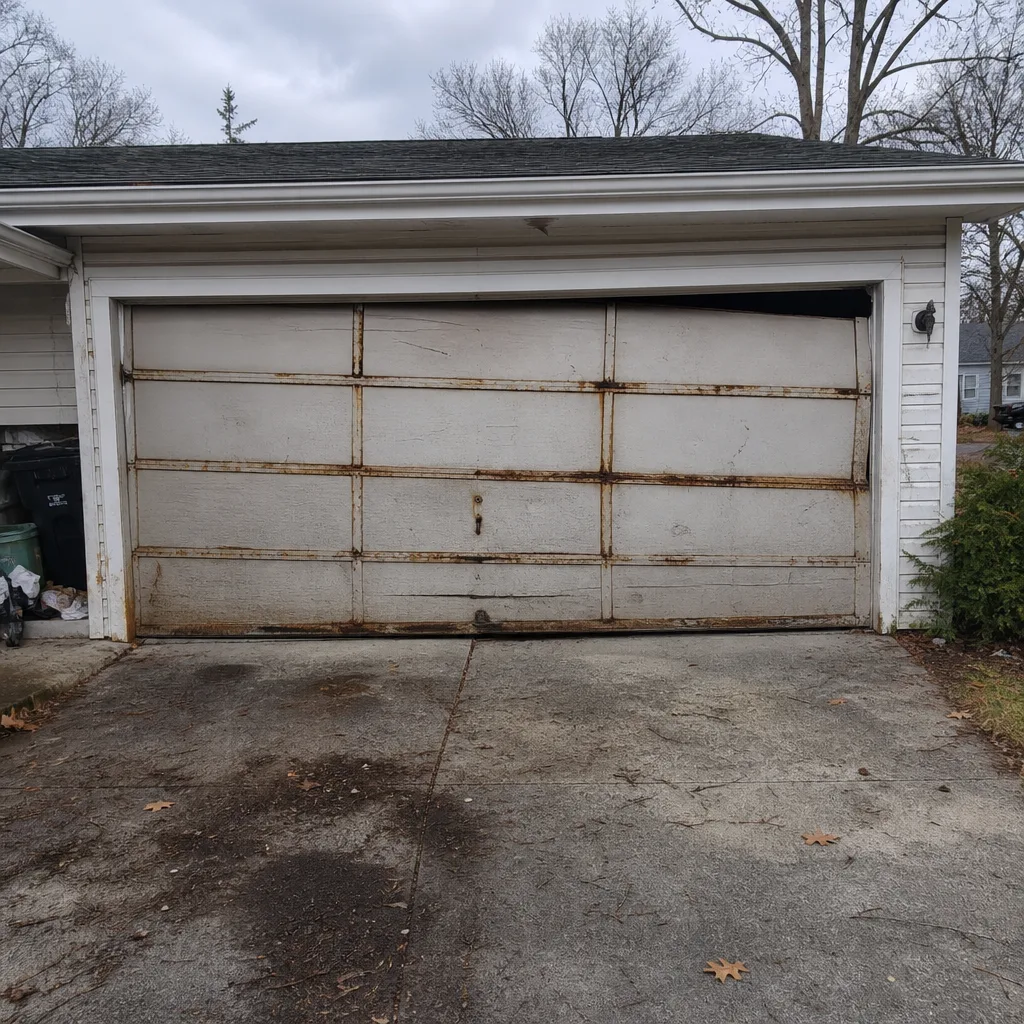
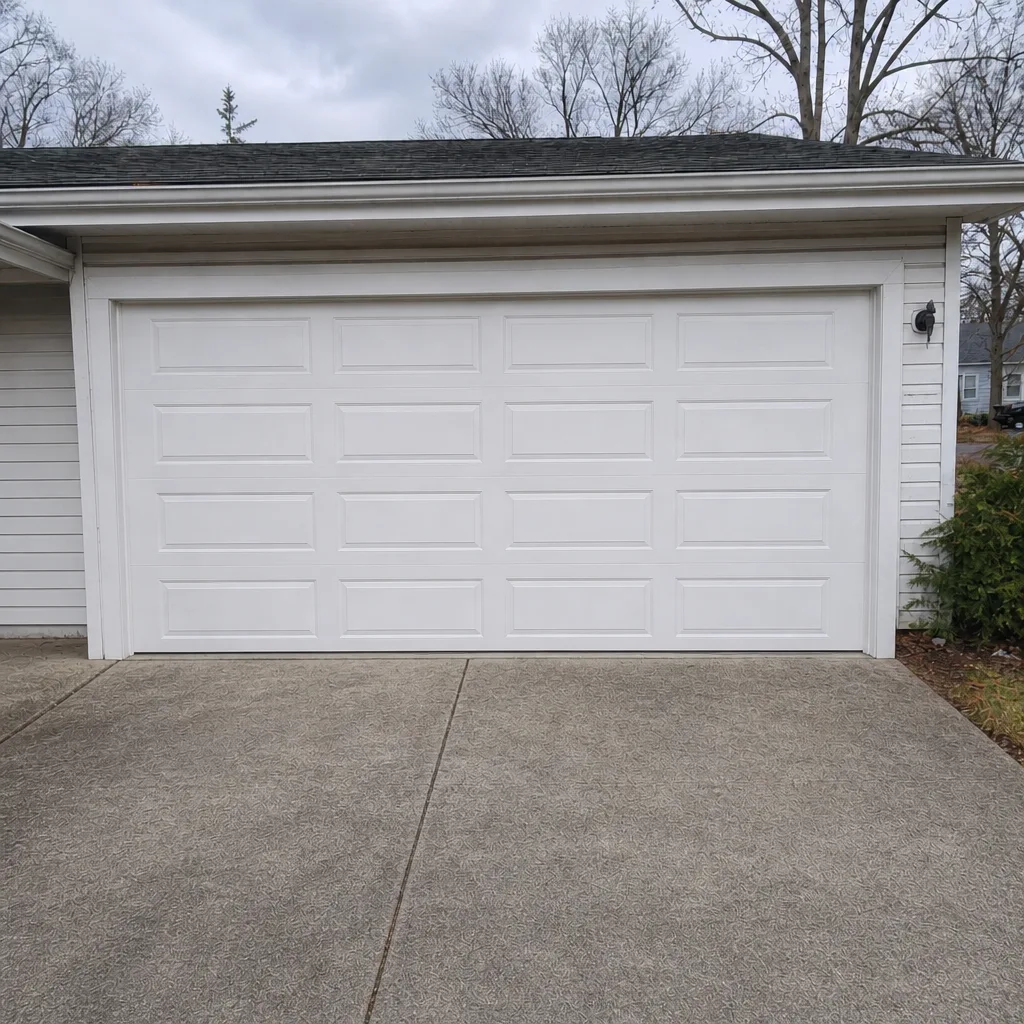
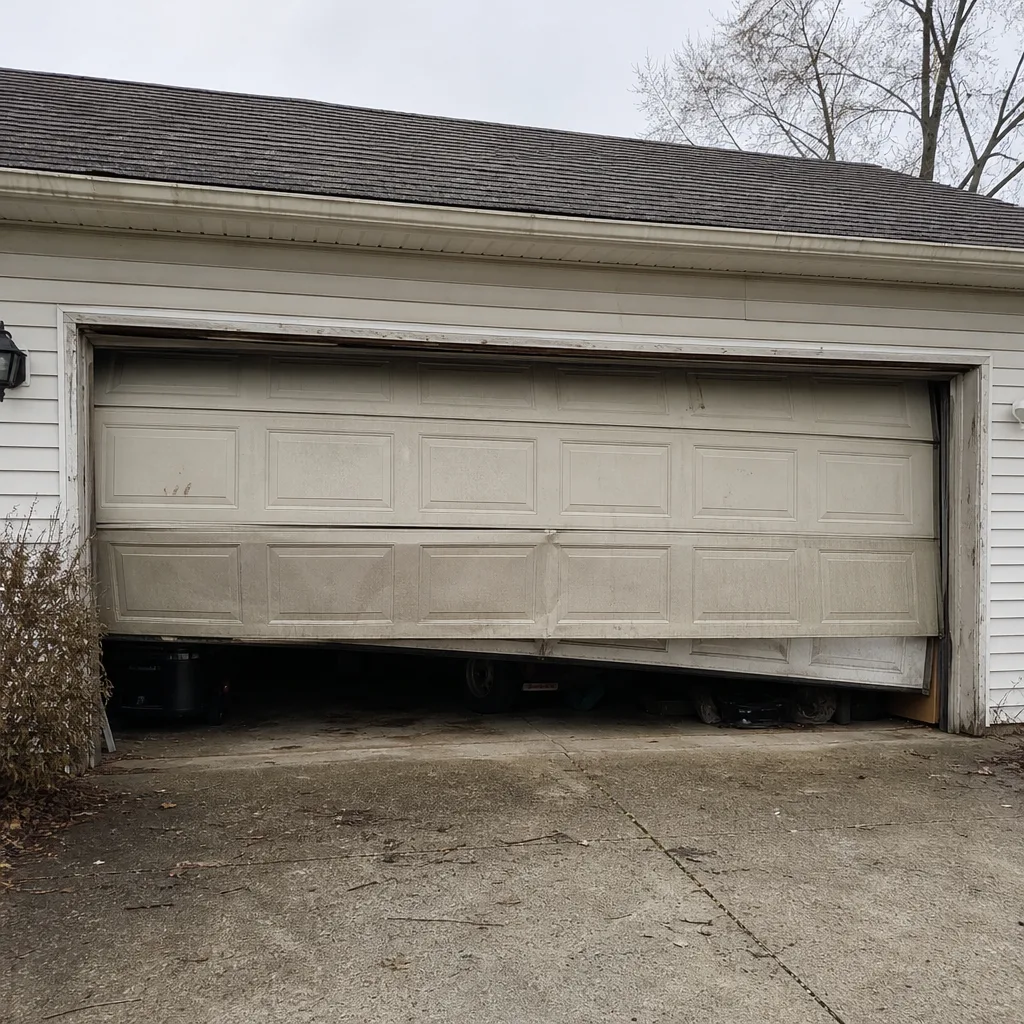
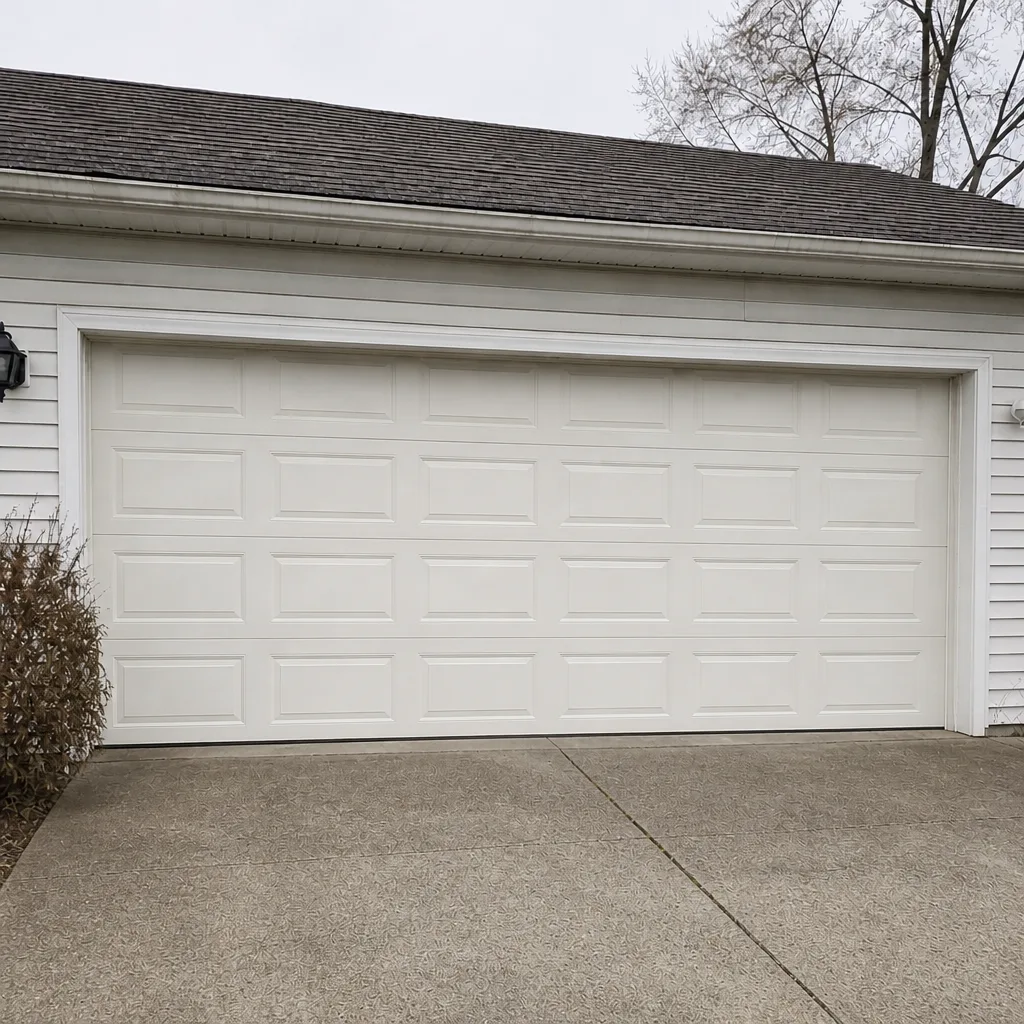
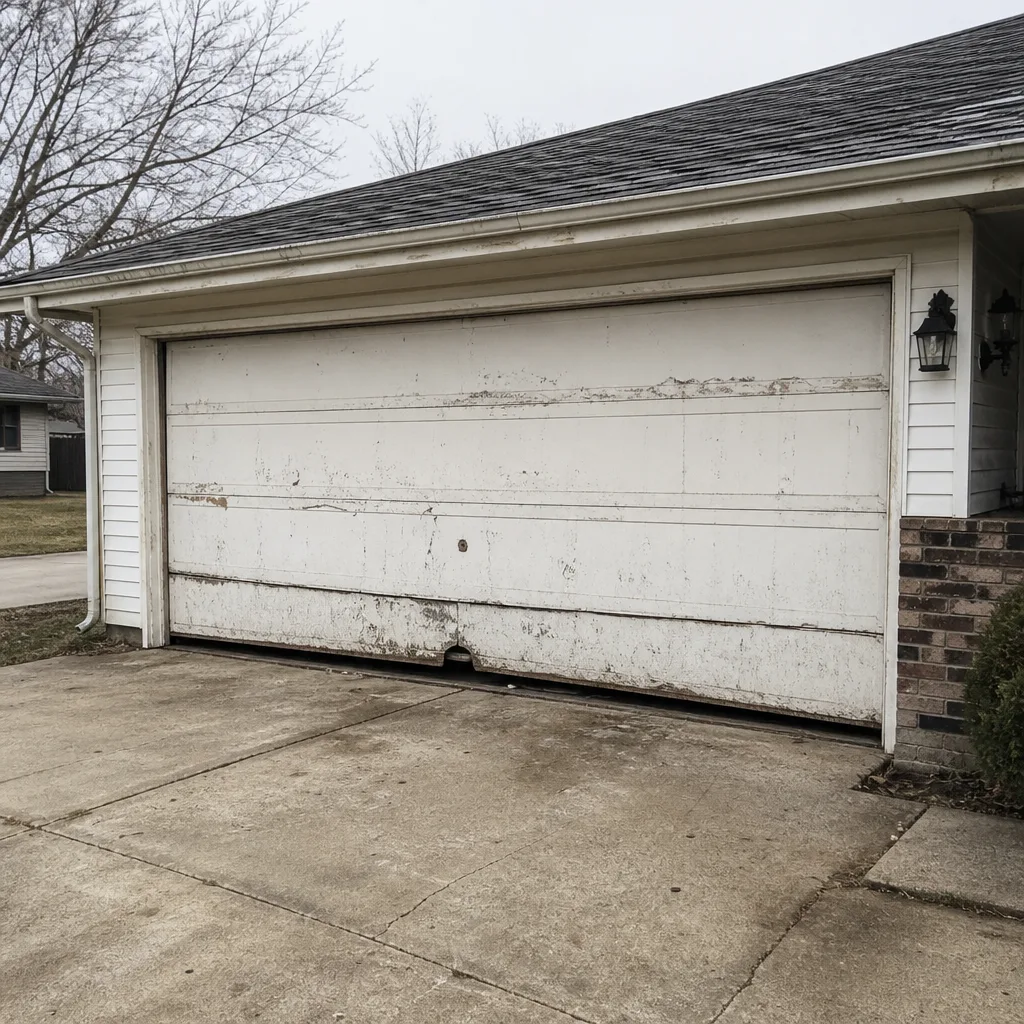
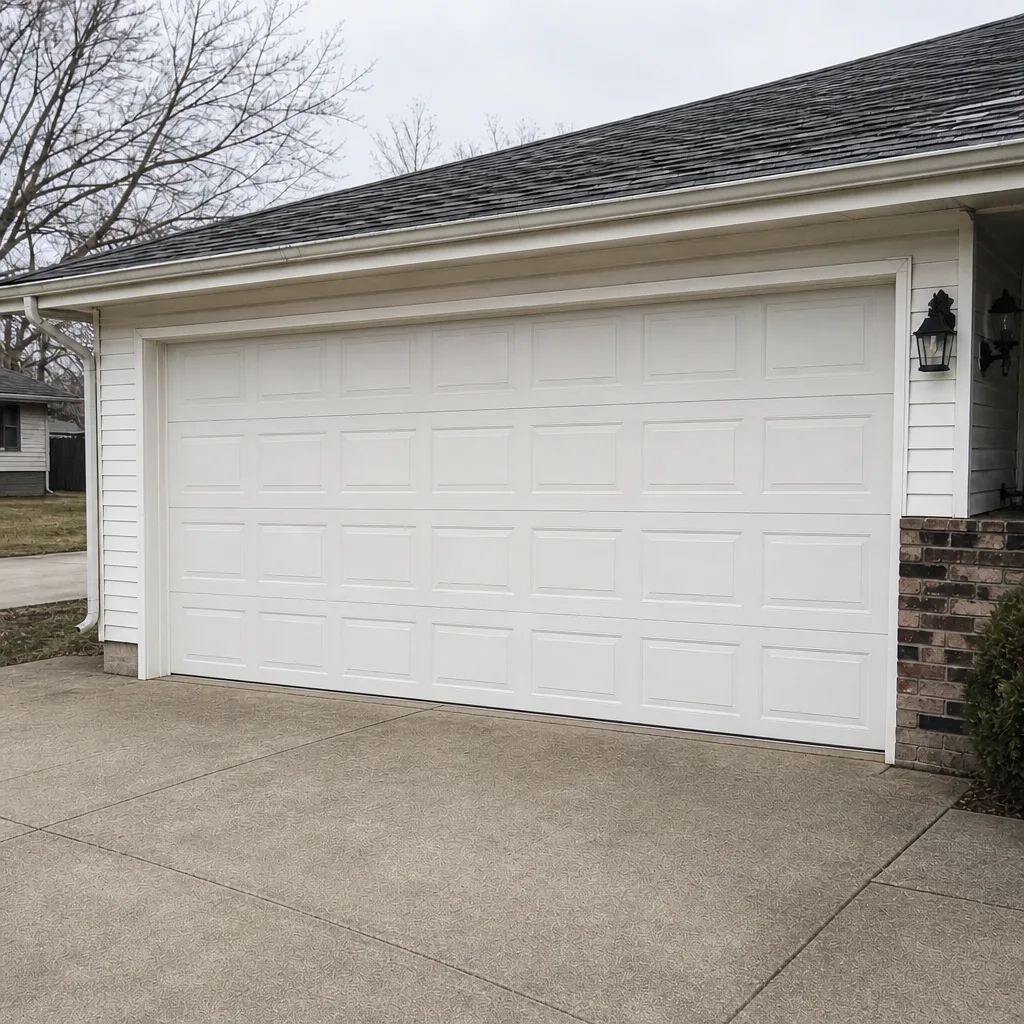
See the difference
 Before
 After
 Before
 After
 Before
 After
When to Call a Professional
Call a professional when the job involves springs, cables, an off-track door, or any repair you’ve discovered mid-project that involves the door’s tension system. Also call when the opener is making grinding or humming noises without moving the door, when the door reverses without an obstruction, or when a panel is cracked and the door won’t sit flush. Don’t wait on these. A stuck door is a security gap and a safety risk in one.
Greenwood Garage Door Repair Pros offers free estimates in Greenwood. Call (866) 876-9721. We answer 24/7. Fast dispatch from 7am to 7pm, Sunday through Friday. The local pro you’re connected with is licensed and insured as their state requires, and the price is quoted and agreed before any work starts, so you’ll know the number before anyone touches your door.
For full garage door replacement rather than repair, the work is measured, ordered, and scheduled, so a free measure and a written price is the right first step. Our Greenwood Garage Door Repair Pros team handles the whole range from spring work to new installations, and that means one call covers it.
Frequently Asked Questions
No. Torsion and extension spring replacement is not a safe DIY project because the spring holds the door’s full weight under tension, and a sudden release can cause severe injury. Leave spring work to a trained technician, even for a single spring. Call (866) 876-9721 for a free estimate if your spring has failed.
Lubrication, sensor alignment, remote and keypad programming, bottom seal replacement, and track cleaning are all safe for most homeowners. None of these tasks requires contact with a tensioned spring or cable. If a task on your list requires you to wind or unwind the spring system, it’s out of DIY territory.
Indiana doesn’t require a statewide residential contractor license for garage door work, which means a homeowner doing a repair has no permit or inspection step to catch a mistake before it becomes a safety problem. Hiring a local professional shifts that accountability to a business you can call back if something isn’t right.
No. The written estimate sets the price regardless of what state the door is in when the technician arrives, and the estimate is free. What changes with a partially done job is the amount of assessment needed to figure out what’s been done and what still needs attention.
A single torsion spring typically runs $180-$340 in Greenwood, and a matched pair is usually replaced together, so a pair costs about twice that. Call (866) 876-9721 for an exact quote. Estimates are free.
Lubricating the tracks is the most common one, and it’s easy to fix: clean them dry and leave them dry. Far more serious is touching a spring after watching a tutorial, which is where the real injury risk lives. When in doubt, stop and call.
The Bottom Line
The line between what’s safe to DIY and what isn’t runs straight through the spring system. Everything outside it is a fair project for a capable Greenwood homeowner: lubrication, sensor alignment, remote programming, bottom seals, track cleaning. Everything inside it belongs with a trained technician, no matter how confident you feel. Indiana’s licensing situation means there’s no inspection catching a mistake, which raises the cost of getting it wrong. When the job crosses that line, call (866) 876-9721. We answer 24/7, fast dispatch runs from 7am to 7pm, Sunday through Friday, and estimates are free. The price is quoted and agreed before any work starts.
Written by the team at Greenwood Garage Door Repair Pros.